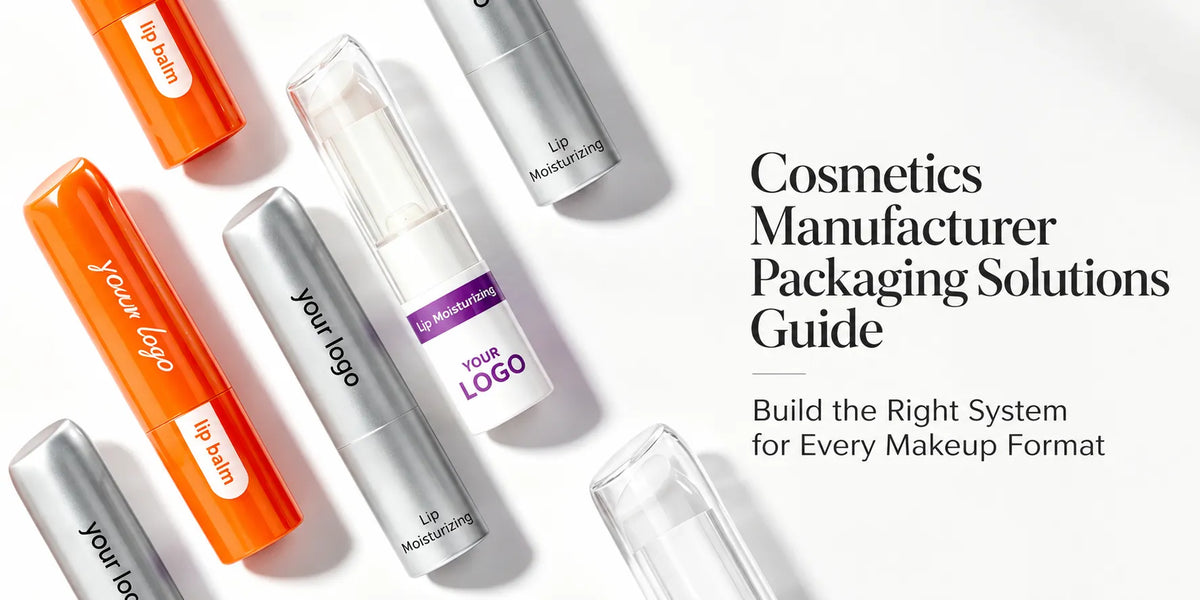
Aluminum lip stick packaging can provide a lightweight metal shell, cooler touch, greater rigidity than a basic lightweight plastic shell, and a genuine metallic identity. These benefits can strengthen a lipstick product, but the outside material still needs to work with the inner mechanism, product cup, lipstick bullet, and cap.
The package must raise and lower the lipstick smoothly, hold the bullet during application, protect the shaped tip, and close securely. Many aluminum lipstick packages therefore use aluminum for the visible shell and selected plastic inner parts for rotation, cup grip, and product support.

KAIYA develops aluminum cosmetic packaging for lipstick projects. We compare the shell, mechanism, inner cup, cap, bullet diameter and hardness, finish, assembly, and repeat-production requirements before recommending an aluminum route.
- Quick screening framework:
- 1. define the lipstick bullet diameter, shape, and hardness;
- 2. decide what aluminum should improve;
- 3. confirm the aluminum shell and functional inner construction;
- 4. test rotation, cup grip, centering, retraction, and cap clearance;
- 5. approve color and finish after the mechanism is stable;
- 6. retain the complete approved assembly for bulk and repeat orders.
1. Benefits of Aluminum Lip Stick Packaging
Aluminum combines low material weight with a rigid metal shell. For lipstick packaging, this creates a defined outer structure without making the component unnecessarily heavy. The cooler first touch and genuine metal surface also give consumers an immediate material signal that cannot be created by color alone.
Its corrosion resistance supports repeated daily handling, although the finished component still needs appropriate surface treatment and compatibility review. Aluminum also supports brushed, matte, polished, gold, silver, champagne, black, and other selected finish directions. Because the metallic effect comes from the actual shell, the package can retain a more authentic metal character than a basic plastic component with a metallic-looking coating.

For premium lipstick, the combination of metal touch, shell rigidity, finish quality, and compact size can create a more refined presentation. Aluminum can also support a longer-life outer-case impression in a refill-oriented lipstick when the selected structure genuinely accepts a replaceable inner unit.
Aluminum is not automatically better than plastic. Plastic usually provides broader shape flexibility, familiar mechanism construction, lower weight, and more commercial cost options. If the brand does not need the metal touch or metallic identity, a well-developed plastic cosmetic packaging route may remain the more practical choice.
2. Check the Twist Mechanism Before the Finish
A beautiful aluminum shell cannot compensate for a weak stick mechanism. The mechanism usually includes a rotating base, internal screw or elevator, product cup, travel path, and stop position. These parts determine whether the formula rises evenly, remains stable during application, and retracts without scraping the tube.
Rotation torque: the base should not feel loose, gritty, or suddenly tight. Torque needs to remain reasonably consistent through the usable travel. A mechanism that turns smoothly when empty may behave differently after the cup carries the real product weight.
Vertical play: excessive movement can make the stick wobble or drop slightly when application pressure is applied. Too little clearance may create binding. The filled sample should be checked at low, medium, and higher extension positions.

Cup fit: the cup diameter and gripping structure must suit the lipstick formula. A softer creamy bullet and a firmer wax-rich bullet do not resist gripping and application pressure in the same way. Poor fit can allow the lipstick to rotate inside the cup, lean, crack near the base, or pull out.
Retraction and protection: the product should retract far enough for the cap to close without touching the tip. If the mechanism allows over-extension, the user may raise more product than the formula can support. Travel height, exposed length, cup support, and cap clearance should therefore be checked with the intended product format.
3. Understand the Hybrid Construction
Many aluminum lipstick packages are not made entirely from aluminum. The outer cap and body may be aluminum, while the inner sleeve, rotating base, screw mechanism, and product cup remain plastic. This hybrid design uses aluminum for the visible shell and tactile value while plastic supports detailed molded geometry and consistent mechanism movement.
The construction should be stated accurately in product communication. An aluminum outer shell does not make the complete assembly mono-material, and it does not automatically make the finished package easy to recycle. If sustainability is part of the project, the brand should ask which parts are aluminum, which are plastic, whether they can be separated, and what claim is supported by the actual specification.
Hybrid construction also affects tolerances. The aluminum shell must fit the inner component without loosening, rotating unexpectedly, or compressing the mechanism. Cap and body gaps should remain even, and the inner base should not protrude or sit off-center. Approval should cover shell dimensions, adhesive or mechanical assembly where applicable, alignment, and repeated opening.
4. Choose Finishes That Suit Repeated Handling
The finish needs to withstand daily contact. Polished surfaces show reflections and fingerprints; brushed effects create directional texture and may disguise minor handling marks; matte finishes reduce glare but need rubbing and sheen checks. Dark colors can reveal edge wear, while pale metallic tones may make variation between separate parts more visible.

- Laser engraving: can create a durable material-led logo where the selected surface provides enough contrast. Fine artwork should be sampled because the visible result changes with the aluminum color and brushing direction.
- Printing: supports colored logos and more flexible artwork, but adhesion, line sharpness, and placement around cylindrical or shaped shells need review.
- Metallic color treatments: can create gold, rose gold, champagne, black, red, blue, and other selected directions. The cap and body should be approved assembled because separate aluminum parts may show tone or reflection differences.
KAIYA confirms finish, artwork, seam orientation, logo position, rub exposure, and packing protection after the mechanism route is stable. This prevents a decorative revision from creating shell-fit or cap-clearance problems late in development.
5. Test Filled Samples for Real Use
An empty mechanism check is useful, but it cannot replace a filled sample. The real formula changes product weight, cup grip, rotation resistance, application pressure, and the amount of residue around the inner sleeve.
Cycle test: raise and lower the product repeatedly through the intended travel. Check for grinding, uneven torque, product twisting, and whether the stop remains clear.
Application test: apply the stick at normal pressure and several extension heights. Look for wobble, leaning, formula cracking near the cup, or product contact with the sleeve.

Cap test: confirm that the cap engages consistently and does not touch the formula. Check whether impact or bag movement can loosen the cap.
Temperature and transport review: formula hardness can change with temperature. The brand should validate the filled component under the conditions relevant to production, shipping, and target market rather than assuming the mechanism behaves identically in every environment.
Drop and appearance review: check the complete stick for shell dents, cap release, mechanism damage, finish scratches, and logo wear according to the project requirements. Aluminum offers a rigid shell, but the finished pack is not damage-proof.
6. How KAIYA Supports Aluminum Lip Stick Packaging
KAIYA is a color cosmetic packaging factory and supplier supporting aluminum lipstick packaging projects. Available support can include component selection, custom colors and finishes, mechanism and cup comparison, refill-oriented structures where available, physical sampling, and bulk-production coordination.
Clients can send the lipstick formula or bullet sample, bullet diameter and shape, hardness, fill weight, preferred aluminum appearance, artwork, expected quantity, and schedule. KAIYA can then compare suitable structures, clarify the aluminum and inner-material construction, and organize mechanism, fit, finish, and filled-sample checks.
Contact KAIYA with the actual lipstick and use requirements. We can connect the aluminum shell with a suitable mechanism, cup, cap, finish, and production plan that remain practical beyond the first presentation sample.