The best lip balm containers are not defined by one material or one fashionable shape. The right container should match the balm format, intended application, brand positioning, carrying scenario, and the visual experience the product needs to create. A weighted aluminum tube, a paper push-up tube, a glass jar, and a character-shaped keychain can all be strong choices, but they solve very different product briefs.

KAIYA develops and supplies lip balm containers across material-led, sculptural, and portable directions. This guide compares five distinctive material routes, three shape strategies, and the growing keychain format so beauty brands can choose a direction before developing colors, logos, finishes, or new molds.
Quick overview:
- Aluminum: choose it for a genuine metal shell, cooler touch, and optional added weight on selected structures.
- Paper, glass, PP, or PETG: use each material for a specific operating, formula, visual, or material-planning objective.
- Sculptural shapes: build recognition through animals, object-inspired forms, rounded biomorphic bodies, or distinctive caps.
- Keychain formats: make the balm visible and easy to carry through an integrated attachment and suitable hardware.
- Final selection: approve the formula, mechanism, closure, decoration, filled weight, and carrying behavior as one package.
Compare Lip Balm Container Options
1. Start with the Product Role, Not a Universal “Best”
A daily-use balm in a familiar solid stick needs a different package from a rich balm applied from a jar. A prestige launch may prioritize material weight and surface precision, while a youth-oriented collection may depend on character shape and portability. The word “best” therefore needs a clear project objective.

Before comparing containers, define the formula format, filling or product-loading route, target capacity, application method, intended price position, carrying scenario, and whether the design will use an existing mold or require original tooling. These decisions narrow the relevant options much faster than selecting by appearance alone.

2. Five Material Directions Create Five Different Lip Balm Experiences
Material affects more than the exterior color. It changes weight, temperature at first touch, transparency, rigidity, dispensing structure, decoration possibilities, and the way the package should be protected during transport. The following routes are not interchangeable; each creates a distinct reason for choosing the container.
Compare Lip Balm Container Options
Material Direction 1: Aluminum Tubes Create a Genuine Metal Experience
An aluminum outer shell gives a lip balm tube a cooler first touch, firmer exterior, clean metallic surface, and a more substantial visual character than a standard lightweight molded-plastic tube. The visible aluminum shell can support selected anodized, brushed, printed, or other confirmed finish directions while the inner cup and twist mechanism remain matched to the balm stick.

For selected compatible structures, an internal iron weight can add density and make the package feel more deliberate in the hand. That added weight is difficult to reproduce through an ordinary thin-wall plastic shell alone. The insert still needs to preserve balance, internal space, rotation, assembly, and packing performance, so its use should be confirmed for the exact model rather than added after the tube has been approved.

Best for: prestige lip care, heavy-feel gifting products, metallic collections, and brands that want the material itself to communicate quality. KAIYA can compare suitable aluminum cosmetic packaging structures, shell finishes, weight options, and complete filled-tube requirements.
Material Direction 2: Paper Tubes Offer Two Clearly Different Structures
KAIYA's paper lip balm tube range includes two operating routes. A paper outer tube with a plastic inner holder and rotating mechanism gives the user a familiar twist-up action. It is suitable when the brand wants a paper-led exterior without giving up the controlled movement of a conventional balm tube.

The second route uses a confirmed 100% paper push-up construction without a plastic lifting mechanism. The user presses the bottom disc upward to expose the balm and follows the product's operating direction to lower it again. This manual structure creates a more complete paper-material direction, but it does not behave like a rotating tube. Formula hardness, filling, bottom-disc movement, cap fit, paper edge condition, and repeated use should be checked with filled samples.

Best for: paper-led lip care, natural or illustrated branding, and projects willing to choose the operating experience that matches their material objective. The twist-up route prioritizes familiar control; the push-up route prioritizes a more complete paper construction.
Material Direction 3: Glass Lip Balm Jars Give Rich Balms a More Substantial Home
This route is a glass lip balm jar, not a lipstick-style tube. Glass provides a rigid wall, visual depth, noticeable weight, and a generally inert formula-contact surface for selected balm, cream, gel, lip mask, or lip-care textures. It can make a small jar feel more substantial while allowing the product or the frosted-glass effect to become part of the presentation.

The glass body is only one part of the finished jar. The lid, liner, seal, decoration, opening diameter, jar depth, applicator plan, and shipping protection still need to suit the formula. Compared with many plastic jars, glass also adds weight and breakage considerations, so the final filled package and carton protection should be evaluated together.
Best for: richer balm formulas, care-led positioning, products applied by finger or separate tool, and projects that value clarity, weight, and a more substantial jar format. KAIYA supplies selected small glass cosmetic packaging options rather than treating glass as a universal route for every lip balm format.
Material Direction 4: All-PP Containers Support a Simpler Material Map
A selected all-PP lip balm container can keep the main package within one plastic family instead of combining an ABS or AS shell with different internal plastics. That simpler material map can support brands seeking easier component identification and fewer material families in a new development. PP also offers low weight and useful toughness, although the final rigidity and feel depend on the grade, wall thickness, ribs, and geometry.

This direction is relevant as European brands review packaging for recyclability, material minimization, and recycled-content planning under the EU Packaging and Packaging Waste Regulation (PPWR). Some customers now prefer PP, PET, or selected PETG routes and may avoid new ABS or AS developments unless a suitable recycled-content plan is available. That is a buyer policy, not a universal PPWR material list: the regulation does not name PP as mandatory or ban ABS and AS by name.
Best for: brands prioritizing a simpler resin-family direction and willing to develop the appearance around the characteristics of PP. Recyclability and environmental claims still depend on the complete container, additives, colorants, decoration, size, formula residue, and the collection and recycling system in the destination market.
Compare Lip Balm Container Options
Material Direction 5: All-PETG Tubes Turn Clarity into the Main Design Feature
An all-PETG lip balm tube can use transparency and color depth as the product's main visual language. Clear, tinted, pink, red, or colorless components reveal the internal construction and create a polished, glass-like appearance without the weight of a glass container. Thick or carefully proportioned walls can also give a small tube a more substantial visual presence.

PETG provides useful toughness for portable cosmetic packaging and can reduce the risk of cracking during ordinary handling compared with more brittle clear-plastic routes. The commercial grade, wall geometry, molding quality, assembly, cap fit, temperature, filled weight, and test conditions collectively determine the finished drop performance.
Best for: transparent color stories, formula-visible concepts, modern glossy collections, and brands that want the complete tube to look clear and coordinated. KAIYA can develop selected PETG structures, transparent colors, logos, and compatible decoration while confirming the material of every functional part. More material detail is available in KAIYA's guide to PETG cosmetic packaging.
Compare Lip Balm Container Options
3. Shape Innovation Can Make the Container Recognizable before the Logo
Once the package format and material route are workable, shape can give the lip balm a more memorable identity. The strongest sculptural designs use the outer form to support a clear product story while protecting the cup, balm, cap, and opening system inside.
Shape Direction 1: Animal Forms Build a Character-Led Collection
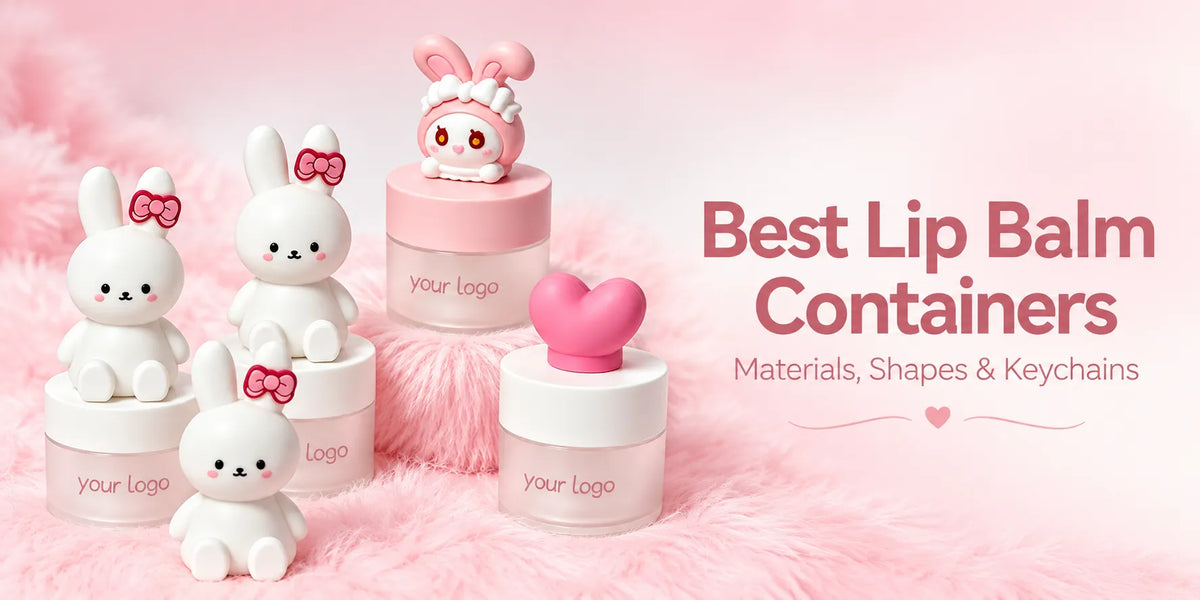
Swan, cat, pig, and other animal-shaped containers turn the complete package into a character. Rounded bodies, ears, tails, facial details, and coordinated colors can create recognition even when the printed logo remains small. Selected KAIYA animal formats also integrate a hanging point, allowing the character to work as both a lip balm container and a visible accessory.

Best for: playful launches, collectible series, gifting, and brands that want several characters or colors within one product family. Buyers should confirm standing stability, cap removal, internal balm position, small-part construction, decoration durability, and protective packing around protruding details.

Shape Direction 2: Object-Inspired and Biomorphic Forms Feel More Original without Becoming Cartoon-Led
Fruit-inspired cases, layered botanical forms, pebble shapes, eggs, droplets, and rounded domes create a softer type of innovation. A fruit-like container can connect directly with the flavor or ingredient story, while an egg or pebble form gives the product a smooth, sculptural identity without relying on an animal face.

These shapes often need a separate internal space for the balm cup or jar. The exterior can therefore look highly original while the working component remains stable and accessible. The design review should cover grip, standing position, opening direction, hinge or cap movement, internal clearances, decoration area, and whether the wide or asymmetric body needs a custom packing tray.

Best for: ingredient-led collections, nature-inspired concepts, modern sculptural lines, and brands that want a recognizable silhouette with a more mature visual tone.
Compare Lip Balm Container Options
Shape Direction 3: Sculptural Lip Balm Jars Turn a Small Format into a Giftable Object
Jar innovation can begin with the complete silhouette rather than decoration alone. Apple-like bodies, gift-box forms, faceted bases, and bow-topped lids make a small lip balm jar feel like a miniature accessory. The shape can support a flavor, holiday, gifting, or collectible story before the customer reads the logo, while transparent or translucent walls add depth to the design.

The cute exterior still needs a practical product chamber. KAIYA reviews the jar opening, usable capacity, wall thickness, lid engagement, finger or applicator access, standing stability, and the way raised bows or asymmetric details are protected in transit. For a series launch, one common jar structure may also be developed through coordinated colors and decorative details so the collection looks varied without losing its family identity.

Best for: rich balms, lip masks, gift sets, seasonal collections, and brands that want a compact jar to deliver a stronger visual and tactile experience.

Shape Direction 4: A Sculptural Cap Can Transform a Familiar Inner Tube
Not every innovation needs to reshape the full body. A beehive-like cap, moon-and-cloud ornament, figurative top, or detailed vintage-style cap can become the focal point while the inner balm tube retains a familiar cylindrical operating structure. This approach concentrates the visual investment where it will be noticed first.

The cap still needs to provide reliable closure and enough internal clearance around the retracted balm. Raised details, rounded loops, figurines, or long decorative elements also change mold release, handling, rubbing, and carton protection. A visually striking cap should therefore be approved as a functional closure, not only as a sculpture.

Best for: honey or botanical stories, fantasy collections, ornate gift products, seasonal designs, and projects that want a recognizable top silhouette without redesigning every internal component.
Compare Lip Balm Container Options
4. Keychain Lip Balm Containers Turn Portability into a Visible Feature
Many lip balm products are already small enough to carry, but a keychain structure changes how they are carried. Instead of remaining hidden in a makeup bag, the balm can attach to a handbag, pouch, belt loop, key ring, or other everyday-carry item. The attachment becomes part of the product's appearance and use.
Integrated Loops Keep the Connection Part of the Molded Design
A loop can be designed into the cap, shoulder, or body so the load transfers through a defined attachment point. This creates a cleaner result than treating the chain as an afterthought. The location should keep the container balanced, preserve cap operation, and avoid pulling directly on a weak decorative part.

Chains, Rings, Clips, and Straps Create Different Carrying Experiences
Selected KAIYA models may support ball chains, split rings, snap hooks, clips, cords, or short straps. A ball chain gives a lighter decorative appearance, a split ring feels more familiar for keys, and a clip or strap makes removal from a bag easier. Hardware size, finish, opening method, and connection strength should match the filled weight and intended use.

Custom Charms Can Extend the Product into a Collection
Acrylic, metal, molded-plastic, silicone, bead, letter, or symbol charms can add another layer of customization when the selected connector supports them. The charm may repeat an ingredient, mascot, initial, seasonal icon, or shade code. Brands can keep one container mold while changing the accessory story across launches, subject to the confirmed hardware and quantity.
The practical check: review the complete filled package while hanging, swinging, opening, and returning it to the attachment point. The cap must remain secure, the loop and connector must carry the intended load, the decoration should tolerate contact with keys or bags, and the user should still be able to access the balm comfortably. KAIYA's keychain makeup packaging range shows how different cosmetic formats can use this accessory-led direction.
Compare Lip Balm Container Options
5. Match the Container Direction to the Launch Objective
| Project Objective | Recommended Container | Key Considerations |
|---|---|---|
| Premium feel | Aluminum tube | Weight, mechanism, finish |
| Paper-based concept | Push-up or twist-up paper tube | Usability, material structure |
| Balm in a jar | Glass lip balm jar | Access, liner, protection |
| Simple plastic design | All-PP container | Components, decoration |
| Clear, modern look | All-PETG tube | Clarity, color, durability |
| Playful or collectible | Animal or novelty shape | Closure, grip, packing |
| Portable everyday use | Keychain container | Attachment, cap security |
Compare Lip Balm Container Options
6. Decide Whether an Existing Design or a New Mold Fits the Project
Many KAIYA lip balm containers already provide a distinctive material, shape, cap, or keychain direction. An existing model may support confirmed colors, logos, surface processes, and selected hardware without changing the mold. This is often the most practical route when the established structure already matches the formula and desired use.

A different animal, original fruit form, new cap sculpture, changed loop position, new dimensions, or another internal operating system requires a separate custom cosmetic packaging assessment. KAIYA can review the concept, internal space, mechanism, closure, attachment, material, decoration, 3D structure, prototyping, tooling, and sample sequence before the design moves toward production.
Compare Lip Balm Container Options
7. Compare the Best Lip Balm Containers with KAIYA
The best choice is the container that gives the product a clear reason to exist while remaining workable as a filled package. Aluminum can create real-metal authority; paper can provide two distinct material and operating routes; glass can elevate a rich balm jar; PP can simplify the resin map; PETG can make clarity part of the design; sculptural shapes can create recognition; and keychain hardware can turn portability into a visible feature.
When requesting options, send the balm format, formula texture or hardness, filling method, target capacity, preferred material or shape, desired carrying method, color and logo references, estimated quantity, destination market, and launch schedule. KAIYA can then recommend relevant existing products or determine whether the concept needs new structural development.