A lip gloss applicator does more than touch the lips. Its shape, material, surface, stem, and relationship with the wiper affect how much formula is collected, how it is placed, and how cleanly the wand returns to the tube. A visually attractive tip can still perform poorly if it does not suit the formula or the other components.

For B2B buyers, choosing a lip gloss tube with applicator means evaluating the complete application system rather than selecting a brush from a photograph. KAIYA offers flocked, silicone, clear, and selected metal applicator directions for removable wands, as well as built-in sponge tips that dispense formula through rotation or squeezing.
Quick screening framework:
- Formula pickup: decide whether the applicator should carry a light, controlled layer or a fuller amount.
- Placement: compare narrow, angled, curved, wide, or reservoir-led profiles around the intended result.
- Surface: flock, silicone, clear molded material, and metal create different contact and cleaning behavior.
- Applicator system: distinguish a removable dip-in wand from a sponge tip fixed directly to a twist or squeeze package.
- Wiping: the stem, wiper opening, and formula viscosity must work with the selected tip.
1. Start with the Application Result, Not the Brush Appearance
Two gloss formulas may need different applicators even when they use similar tubes. A light lip oil may need controlled pickup so it does not flood the lips, while a thicker or high-shine gloss may need a broader surface that can carry and spread more product. A highly pigmented formula can place greater emphasis on edge control, whereas a transparent gloss may prioritize smooth, even payoff.

The intended user action also matters. Some products are designed for quick coverage in one or two passes; others need a narrower tip for targeted placement around the lip line. This is why applicator choice should begin with formula behavior and application goal. The visual profile of the tip comes after its working role is clear.

During early discussion, brands should describe the formula texture, desired pickup, coverage area, and whether a precise or generous application is preferred. This helps KAIYA narrow the lip gloss containers with brush options before decorated samples are made.
2. Flocked Applicators: Familiar Pickup with Multiple Shape Options
Flocked applicators use fine fibers on a molded tip to hold and release product. They are common in lip gloss packaging because the fiber surface can pick up formula across the applicator and spread it with a soft contact. Performance varies with the tip geometry, flock length and density, and the area covered by the fibers.

A slim or pointed tip can support more controlled placement. An angled doe-foot profile gives a recognizable lip-contact surface. Wider or curved profiles can carry more formula and follow the lip contour, while selected reservoir shapes may retain additional product within the tip.

Buyers comparing empty lip gloss tubes with brush applicator should request a filled test. An empty brush may look soft and well shaped, yet its actual loading depends on the gloss and wiper. Check whether the fibers remain evenly covered, whether product releases without patchiness, and whether the tip returns through the wiper without excessive force.
3. Silicone Applicators: A Smooth, Non-Flocked Contact Surface
A lip gloss tube with silicone applicator uses a smooth molded surface rather than a flocked fiber layer. The formula sits on the outside or within designed grooves and is spread directly onto the lips. This gives a distinctly smooth contact and makes the applicator surface visually easy to inspect.

Silicone is useful when a brand wants an alternative to the familiar doe-foot experience or a tool-led, treatment-inspired presentation. The exact profile still matters: a flat paddle, rounded tip, flexible edge, or grooved surface will not collect and distribute product in the same way. Silicone does not automatically mean lower or higher pickup; that outcome depends on the form, flexibility, formula, and wiper.
Sampling should confirm whether the tip flexes comfortably, whether the formula stays on the surface during withdrawal, and whether the wiper removes too much product. A smooth tip may require a different balance from the one used for a flocked applicator.
5. Metal Applicators: Cooling Contact and a Distinctive Tool-Led Look
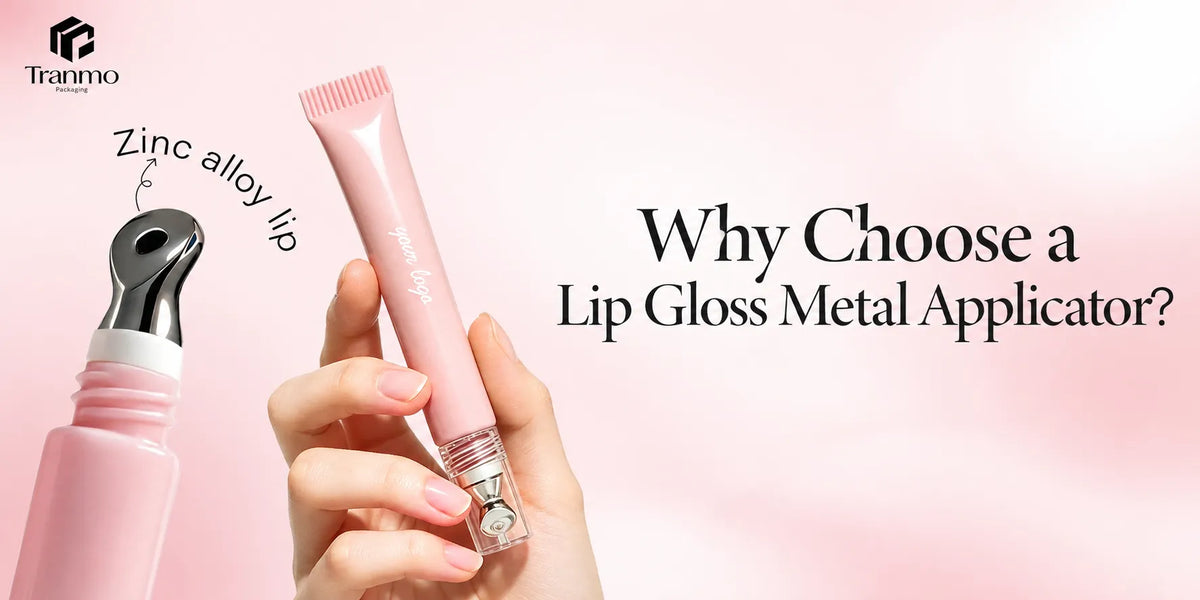
A lip gloss tube with metal applicator creates a cool contact sensation and a more tool-like appearance. This direction is often relevant to lip oils, lip treatments, and gloss-care hybrids where the application feel is part of the product concept. The metal part may be shaped to glide across the lips while formula is supplied from the wand or dispensing structure.

The term “metal applicator” should not be treated as one universal design. Shape, edge treatment, surface smoothness, weight, and how the metal part attaches to the stem or package all require review. The formula must reach the application surface without excessive pooling, and the tip should move through its bottle opening or protective cap without damaging adjacent parts.

A physical sample is particularly important because the cooling sensation, balance, and lip contact cannot be judged accurately from dimensions alone. Buyers should also confirm the intended cleaning behavior and whether the selected formula leaves a visually acceptable film on the metal surface.
5. Roller-Ball Applicators Suit Mobile Lip Oil Formulas
Lip gloss roller tubes use a ball fitted into the top of the bottle as both the pickup and application surface. When the ball moves across the lips, it rotates inside its housing, collects formula from the reservoir, and spreads it without a removable wand.
This structure is more relevant to fluid lip oils and light treatment formulas that can move around the ball consistently. A formula that is too thick may not wet the roller evenly, while a very mobile formula places greater pressure on the ball fit, housing, and cap to control leakage and residue.

Buyers should check whether the ball rotates smoothly, how quickly the formula reaches it, whether pickup remains even across repeated use, and how much residue gathers around the housing. Filled samples should also be stored upright, on their side, and through expected transport conditions to review cap protection and sealing. Roller-ball application creates a different spreading and contact experience from a flocked wand, so it should be chosen for the formula and intended use rather than only for its appearance.
6. Built-In Sponge Tips Connect the Applicator Directly to the Tube
Not every lip gloss applicator is removed from the bottle on a separate wand. Some packages place a soft sponge tip directly on the tube or pen body. The formula travels through an internal outlet into the sponge, so dispensing and application happen through the same fixed component. This makes the package compact and keeps the applicator stored together with the formula.
- Twist-dispensing sponge-tip pen: the user rotates the base to advance formula through the package and into the fixed sponge head. Buyers should check how many turns are needed for first use, whether later rotations release a consistent amount, whether the sponge loads evenly, and whether product continues to emerge after rotation stops.
- Squeeze tube with a built-in sponge tip: the user presses the flexible tube body to move formula into the sponge. The project should confirm comfortable squeeze force, outlet size, sponge saturation, the amount released with normal pressure, tube recovery, and whether residue or continued flow appears after use.

These integrated sponge applicators do not use the same bottle-and-wiper pickup cycle as a dip-in wand. Formula viscosity must suit the internal flow path, and the cap needs enough clearance to protect the sponge without pressing it or collecting excessive product. Filled testing should cover first activation, repeated dispensing, application, residue, cap cleanliness, and storage in different positions.
KAIYA can compare the twist and squeeze-tube routes according to the formula and desired use. The decision is not only between two package shapes; it is between rotation-driven and pressure-driven dispensing.
7. Clear Applicators: A Transparent Tool for Formula-Led Design
A clear molded applicator allows the formula color to remain visible around or through the tool. Combined with a transparent bottle and stem direction, clear lip gloss wand tubes can create a clean, formula-led appearance that works well for transparent gloss, lip oil, shimmer, and tinted formulas.

The appeal is primarily visual, but the applicator must still provide useful pickup and contact. Clear tips may use a simple paddle, curved profile, or other molded form. Because the surface is exposed visually, residue distribution and molding quality can be more noticeable than on a flocked tip.
When selecting a lip gloss tube clear wand, review the complete view after filling. Formula color, stem appearance, wiper, bubbles, and product left around the neck can all influence the final effect. KAIYA's clear cosmetic packaging options can be coordinated with transparent or translucent applicator directions where the chosen component allows.
8. The Wiper Controls More Than Excess Formula
The wiper is the insert fitted at the bottle neck. As the wand is withdrawn, it controls excess formula on the stem and applicator. Its opening size, flexibility, contact area, and fit with the neck influence the amount carried out, the force required to remove and reinsert the wand, and how much residue remains around the opening.

A tighter wiping action may produce a cleaner stem but can leave a broad applicator underloaded. A more open wiper may support a thicker formula or larger tip but can allow too much product to collect. The balance is especially important with unusual applicators because a metal, silicone, clear, or large flocked tip may not behave like a standard doe-foot.
The wiper should therefore be confirmed with the selected bottle, stem, applicator, and formula. Changing one part late in development can change pickup and handling across the complete system.
9. Stem Length and Applicator Reach Affect Product Access
The stem connects the cap to the applicator and determines where the tip sits inside the bottle. If it is too short for the selected chamber, more product may remain difficult to reach near the bottom. If it is too long or poorly matched to the internal geometry, the applicator may press against the base or fail to align correctly during closure.
Curved, square, thick-wall, and mini makeup containers can create different internal spaces even when their stated capacities appear similar. Buyers should examine the actual chamber, shoulder, bottom shape, and applicator position rather than comparing stem length as an isolated number.
Reach does not mean every trace of formula can be collected. The practical goal is a sensible combination of usable access, smooth withdrawal, comfortable application, and reliable closure.
10. Build the Applicator System with KAIYA
KAIYA develops and supplies lip gloss packaging tubes with multiple bottle, cap, wiper, stem, and applicator directions. Our range includes standard and wide flocked tips, silicone and clear molded applicators, selected metal directions, twist-dispensing sponge-tip pens, and squeeze tubes with built-in sponge tips. Color, transparency, logo, and surface decoration can be coordinated after the working combination has been narrowed.

For an efficient evaluation, send the formula type or viscosity direction, desired pickup, preferred application feel, capacity, package style, quantity, and target launch schedule. KAIYA can compare existing components, prepare relevant samples, and support the move from application testing to custom cosmetic packaging and volume production.