Mascara Brush Types: How Shape, Material, and Wiper Control Formula Pickup
Mascara packaging may use a familiar tube silhouette, but the application system still offers substantial room for differentiation. Different mascara brush types can change how formula is collected, wiped, deposited, and combed through the lashes. The visible result is therefore shaped by more than the outside tube.
For B2B buyers, selecting an empty mascara tube with brush means reviewing the bottle, neck, wiper, stem, brush, cap, and formula as one working system. This guide compares the principal brush materials and shapes, explains how the mascara wiper controls product load, and shows what should be confirmed before a standard or custom applicator moves into production.

Quick overview:
- Brush construction: compare twisted-wire fiber, molded, and selected metal applicator directions.
- Brush profile: choose the diameter, curve, taper, combing surface, and tip around the intended lash result.
- Wiper control: match the opening and wiping force to the brush, stem, and formula load.
- Formula fit: test the actual formula because viscosity and product structure change pickup and release.
- Component fit: confirm neck clearance, stem length, cap space, withdrawal, and reinsertion.
- Customization route: distinguish an available brush option from color coordination, component matching, and original brush development.
Discuss Your Project
1. The Brush, Wiper, Stem, and Formula Form One Application System
The brush applies mascara, while the wiper is a separate insert fixed inside the bottle neck. As the wand is withdrawn, the wiper removes formula from the stem and controls the load remaining on the brush. The stem positions the brush inside the reservoir, and the neck and cap keep the complete assembly aligned and closed.
This relationship explains why buyers should not approve a brush from a photograph alone. A full fiber brush may carry too much formula when paired with an open wiper. A fine molded brush may arrive underloaded when the wiper removes too much product. A curved head may deform if its widest point has insufficient clearance. KAIYA therefore treats the brush and wiper as part of the complete mascara tube sourcing and sampling decision.

2. Brush Material Changes Pickup, Flexibility, and Lash Contact
Material and manufacturing route determine how the application surface is formed. They influence bristle geometry, flexibility, formula retention, visual appearance, and the type of customization that can be considered.
- Twisted-Wire Fiber Brushes
A twisted-wire fiber brush holds cut fibers between two sections of twisted wire. Its working character depends on fiber length, density, stiffness, brush diameter, trimming pattern, and the final profile. A fuller fiber structure can hold formula between many bristles and support a more loaded application, while a slimmer or more precisely trimmed version can improve access and combing control.
Fiber brushes can be developed with straight, tapered, curved, spiral, hourglass, or other controlled profiles. The brush should still be evaluated after wiping because an attractive dry sample may carry and release formula differently once the fibers are saturated.

- Molded Plastic and Flexible Brush Directions
A molded brush forms its teeth, combs, grooves, reservoirs, and tip geometry through a mold. This route can create highly repeatable tooth spacing and defined application zones. Short molded teeth often support separation and controlled placement, while longer or more flexible molded elements can create a softer combing action.
When a buyer requests a silicone mascara brush, the actual material specification should be confirmed. Market language often uses “silicone brush” broadly, while a selected component may be produced from silicone, TPE, TPEE, or another specified flexible material. Material hardness, tooth design, formula pickup, wiper fit, and comfort should be assessed on the actual component rather than inferred from its appearance.

- Metal Applicators and Ribbed Lash Tools
Selected metal mascara applicators use a solid, ribbed, grooved, or spiral working surface instead of conventional fiber bristles. They can create a slim, precise, tool-led appearance for lash treatment, grooming, definition, or other specialized eye concepts. For a mascara with metal applicator, the cool, rigid contact can also become part of the intended product experience.
A metal applicator collects formula along grooves, threads, or textured areas rather than between dense fibers. The formula and wiper should leave a useful amount without heavy buildup. Buyers should confirm the metal specification, edge and surface finish, stem attachment, eye-area comfort, withdrawal clearance, and filled performance. KAIYA can review selected metal applicator directions within a broader mascara tube innovation project.

Discuss Your Project
3. Common Mascara Wand Types Support Different Application Directions
The most useful comparison of mascara wand types connects each profile with a practical application direction. One profile does not produce the same result across every project, because formula structure, bristle geometry, wiping, and application technique remain part of the outcome.
| Brush Profile | Application | Packaging Check |
|---|---|---|
| Classic Straight | Even lash coverage | Uniform wiping |
| Large / Full | Fuller loading and coverage | Neck clearance, excess control |
| Slim Precision | Lower lashes and corners | Pickup and wiping |
| Tapered / Conical | Full coverage, precise tip | Even formula loading |
| Curved | Lash lifting and curling | Brush orientation, clearance |
| Comb-Style | Lash separation and definition | Tooth spacing, buildup |
| Dual-Ended | Multiple application functions | Independent wiping, balance |

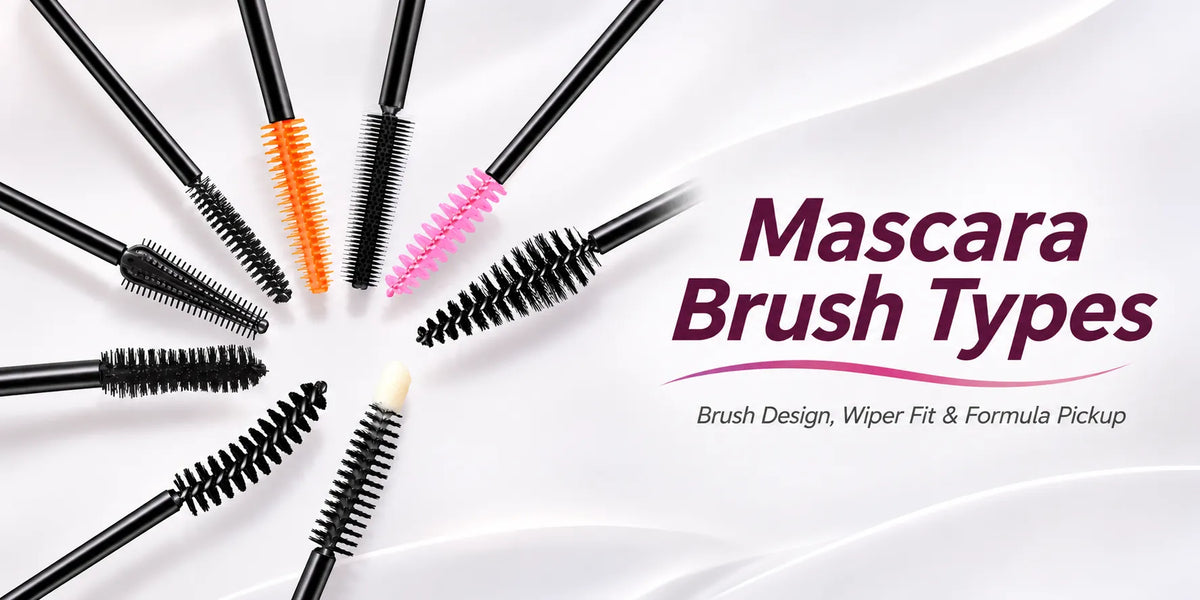
These types of mascara wands can also be adjusted through brush diameter, tip shape, density, and flexibility. A curved mascara brush, for example, may use fibers or molded teeth; the visible curve alone does not define the complete application behavior.
4. Diameter, Density, Spacing, and Flexibility Refine the Brush Result
Two brushes with the same general silhouette can perform differently. Brush diameter changes the contact area and the amount of material that can sit around the head. Bristle or tooth density affects how much formula is retained and how freely lashes can pass through the brush. Spacing influences whether the tool coats, separates, or groups the lashes.
Flexibility also changes the application gesture. A firmer comb can provide deliberate separation, while a more flexible surface may feel softer and follow the lash line differently. Tip geometry matters for corners and lower lashes, and asymmetrical or multi-zone brushes may assign separate roles to different sides. When comparing types of mascara brushes, buyers should request close-up dimensions and filled samples rather than relying only on the overall outline.
Discuss Your Project
5. The Mascara Wiper Controls the Load Left on the Brush
The mascara wiper is one of the most influential components in the pack. Its opening, material, flexibility, contact length, and fit inside the neck affect how much formula remains on the brush, how clean the stem appears, and how much resistance the user feels during withdrawal and reinsertion.
If wiping is too open for the selected formula and brush, the wand may carry excessive product, create clumps, and leave more residue around the neck. If the wiping action is too tight, it can remove too much formula, leave a large brush unevenly loaded, or deform flexible teeth and fibers. The right balance depends on both the applicator and the formula.
A filled test should check the distribution left across the applicator, residue on the withdrawn stem, and consistency of the product load after repeated use. Buyers evaluating makeup tube systems should also confirm that the chosen wiper remains compatible with the actual bottle neck, stem diameter, and assembly route.
6. Stem Length, Bottle Neck, and Cap Space Limit Brush Compatibility
The stem determines where the brush sits inside the bottle and how much of the chamber it can access. A stem that is too short may leave more formula difficult to reach near the bottom; one that is too long may press the brush against the base or interfere with closure. The usable length should be reviewed with the bottle shoulder, internal base, wiper position, and cap engagement.
The widest brush section must pass through the neck and wiper without damaging the applicator. Curved, large, or asymmetrical brushes may need more deliberate alignment and clearance than a narrow straight brush. KAIYA can compare these relationships within selected cosmetic bottle and applicator systems before colors and decoration are finalized.
Discuss Your Project
7. Formula Behavior Changes How Every Brush Performs
A more viscous or high-solids mascara may remain between fiber bristles and require a different wiping balance from a lighter formula. A formula intended for fine separation may need controlled loading so the teeth stay visible and can pass between lashes. A volumizing direction may need a fuller deposit, but excessive load can hide the brush profile and create clumping.
The formula can also change during storage and repeated opening, affecting how it moves through the wiper and sits on the brush. For projects that coordinate packaging with finished product development, KAIYA can review the applicator system alongside a private label or custom mascara direction. Physical filled samples remain the appropriate basis for approval.
8. Choose the Right Level of Brush Customization
Customization can begin at several different levels:
- Available brush selection: choose a compatible brush from an established component family and test it with the intended formula.
- Color and component coordination: retain an existing brush design while coordinating available brush color, stem, cap, bottle, and decoration.
- Matched system adjustment: compare compatible wipers, stems, or bottle-neck combinations around a selected brush and formula.
- Original brush development: assess a new molded architecture, fiber profile, trimming pattern, or specialized applicator when existing options cannot create the required function.
Original development may require design work, material review, tooling, engineering trials, and a larger production commitment. A change to brush diameter, curvature, tooth pattern, or material may also require a new wiper, stem, neck relationship, or filled test. KAIYA can review the requested level of custom cosmetic packaging development and identify which parts can use established components and which require separate assessment.
Discuss Your Project
9. Approve the Filled Brush-and-Wiper System before Production
Final approval should use the intended formula and the complete production-intended component set. Useful checks include:
- formula pickup and distribution across the brush;
- wipe consistency around the brush and stem;
- withdrawal and reinsertion resistance;
- brush deformation after repeated passage through the wiper;
- access to corners, lower lashes, and the intended lash area;
- formula release, separation, buildup, and clumping behavior;
- stem reach, brush position inside the bottle, and cap closure;
- neck residue, package cleanliness, and repeated-use appearance.
The approved reference should record the bottle, neck, wiper, stem, brush, cap, formula, and assembly combination. Replacing only one of these parts in a repeat order can change pickup or handling even when the exterior tube looks unchanged.

10. Build a Custom Mascara Application System with KAIYA
KAIYA supports empty mascara tube projects with multiple fiber, molded, curved, slim, comb-style, dual-ended, and selected metal applicator directions. Depending on the selected product and project route, we can compare compatible brushes, stems, wipers, bottles, caps, colors, and decoration; prepare samples; review filled performance; and assess more original development when established components do not meet the brief.
To begin, share the formula direction, desired lash effect, preferred brush material and shape, target capacity, tube style, quantity, market, and launch schedule. These details allow the brush and mascara wiper to be evaluated as a working application system rather than as separate catalog parts.