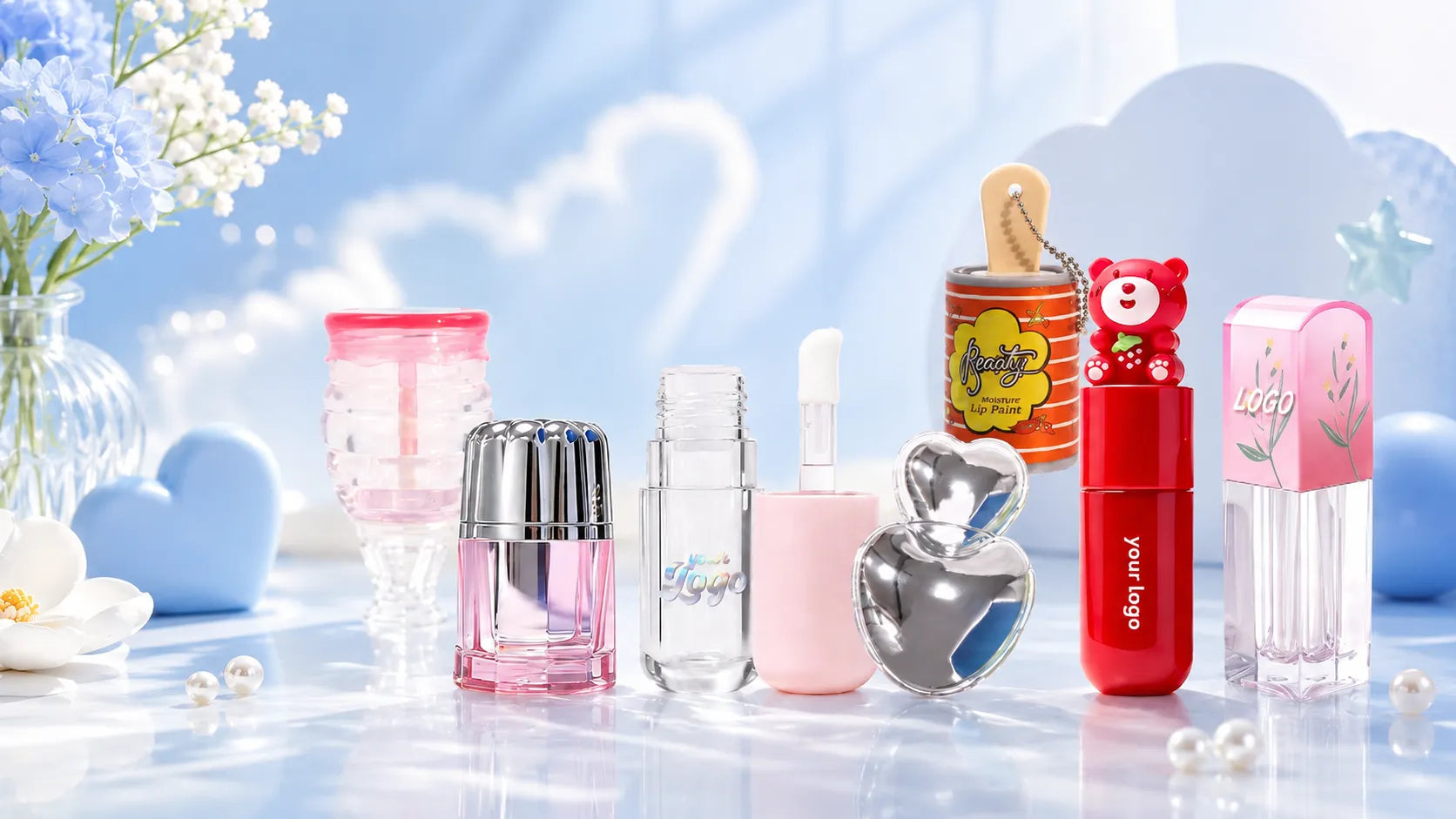
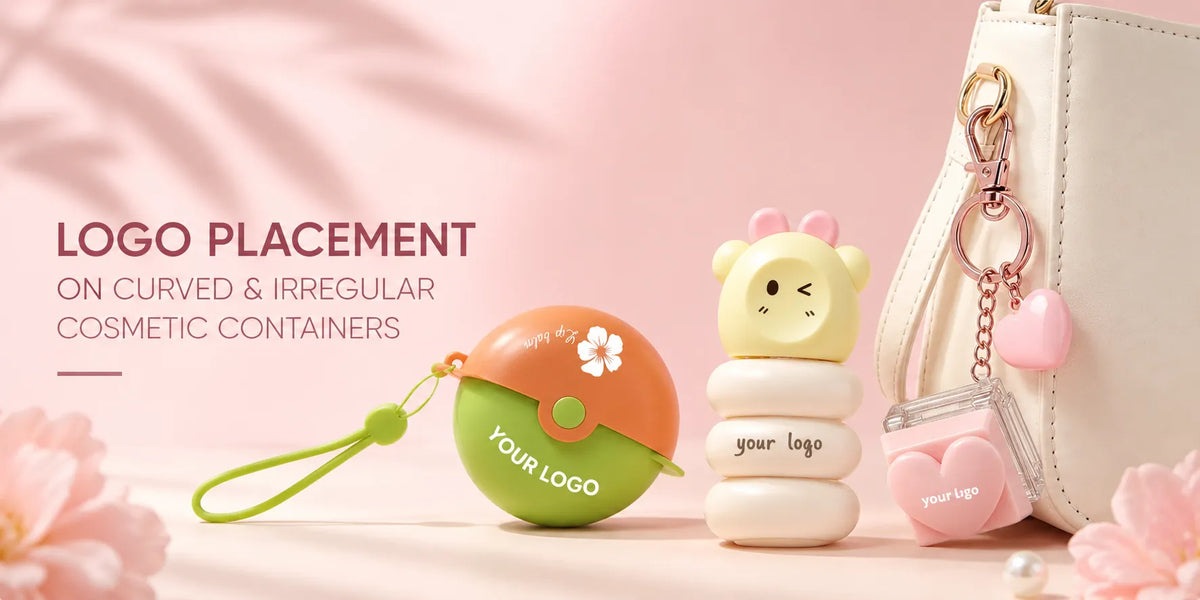
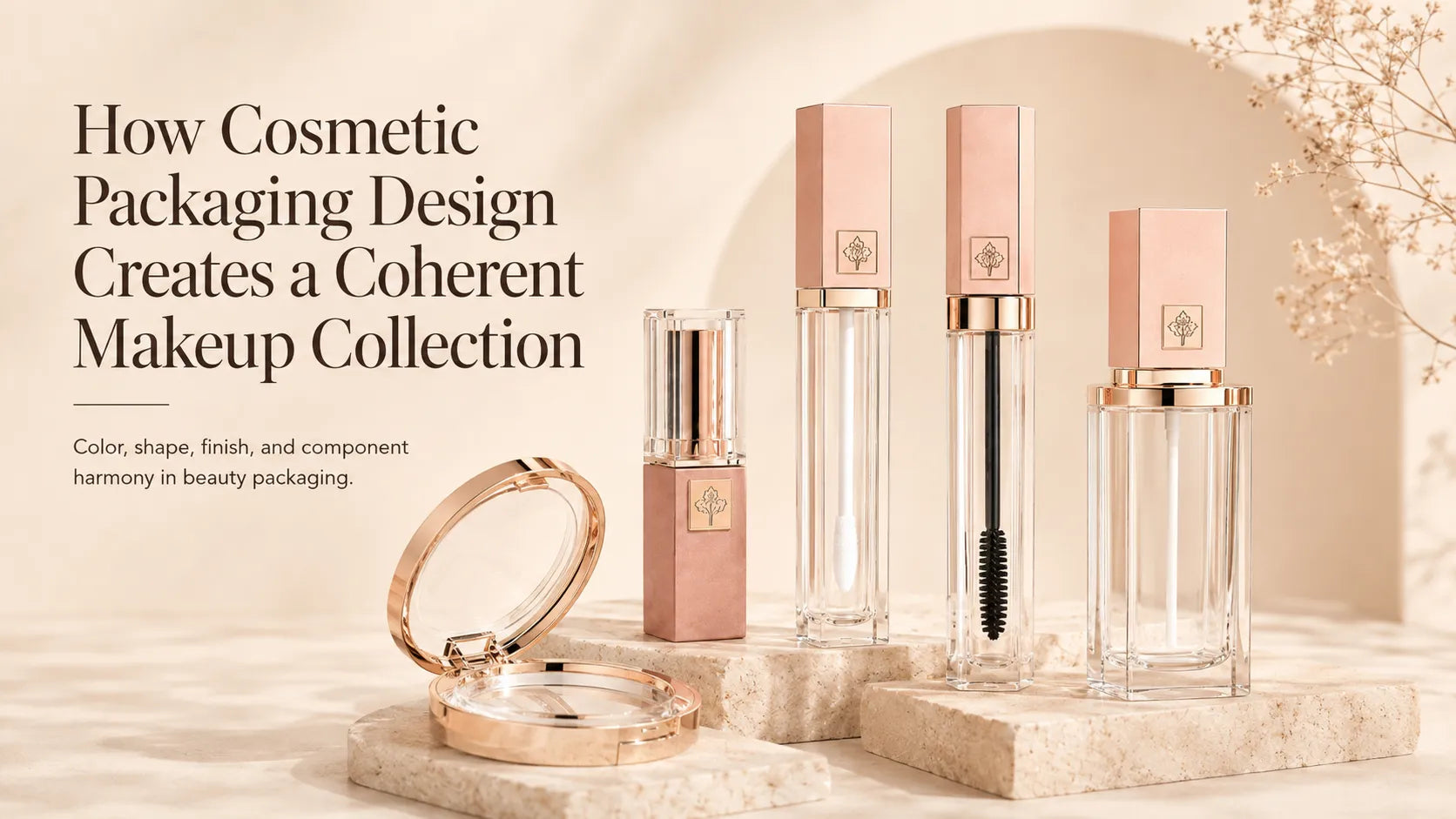
Two cosmetic packages with the same nominal capacity can produce different quotations and minimum order quantities. One may use an existing tube and one-color logo, while the other requires custom-molded colors, several printed colors, a special applicator, a reflective finish, separate SKU versions, and more protective packing.

For B2B buyers, the useful approach is to compare the complete component and process specification rather than ask for a price from a reference image. This guide explains the main factors that change a cosmetic packaging quotation and MOQ without assigning unconfirmed fixed costs to processes that vary by product and project.
Quick quotation framework:
- Base package: finished stock, existing mold requiring production, or new tooling.
- Component set: body, cap, liner, wiper, stem, applicator, pump, roller, insert, mirror, pan, or other parts.
- Color plan: standard stock color, custom molded color, coating, and the number of component colors.
- Decoration plan: artwork, number of print colors, coverage, process, finish layers, and logo position.
- Order plan: quantity by SKU, shared parts, assembly, packing, destination, and repeat-order expectation.
1. Start with the Exact Base Package
The first quotation driver is whether the package already exists as finished inventory, uses an existing mold but needs a new production run, or requires original tooling. These routes are not the same:
- Ready finished stock: can provide the most flexible and fastest starting point when the required model, color, and quantity are actually available.
- Existing mold without inventory: avoids new tooling but still requires component production, material preparation, scheduling, assembly, and possibly decoration.
- Semi-custom development: retains the established structure while changing molded colors, coating, artwork, finishes, selected caps, applicators, or component combinations.
- New mold development: adds appearance and structural design, engineering, DFM, prototypes, tooling, trials, engineering samples, revisions, and production validation.

For quotation purposes, the important point is to name the route accurately. “Existing model” does not always mean “ready to ship,” and “custom” does not always mean every component needs a new mold.
2. More Components Create More Production Requirements
A package quotation is built from its complete bill of components, not only the visible body. A lip gloss or mascara package may include a bottle, wiper, stem, brush, cap, inner cap, and decoration. A compact may include an outer case, hinge or closure, mirror, pan, insert, puff, and protective parts. A pump bottle includes the bottle, pump system, closure, and any collar or overcap.

Each part can introduce its own material, mold, color, production batch, tolerance, assembly, inspection, and packing requirement. Adding a decorative cap insert or changing a standard applicator may look minor in a rendering but can require a separate supplier route and a new compatibility sample.
For a clear comparison, the quotation should state which components are included, which are supplied assembled, which are packed separately, and whether the price includes decoration, special accessories, or only the empty base package.
3. Custom Color Can Affect Several Components Separately
Color changes cost and MOQ according to how it is created and how many components require it. A standard stock color uses an existing production direction. A custom injection color requires material and color preparation for the relevant molded part. A spray coating color adds surface preparation, coating, curing, handling, and inspection to a compatible component.
One package may also contain several different materials. The same color reference can appear differently on a transparent bottle, opaque cap, flexible tube, metal shell, and coated surface. Matching those parts may require separate trials rather than one color instruction for the complete package.
- One standard component color: normally creates the simplest route.

- One custom color across several parts: may involve several material batches and color approvals.
- Different colors by SKU: can divide the order into smaller production versions even when the total quantity looks large.

4. Printing Colors and Artwork Complexity Change the Decoration Route
A one-color logo, multi-color graphic, full repeated pattern, small curved print, and metallic foil detail do not use the same production setup. Buyers should provide the actual vector artwork and intended position before expecting a final quotation.
- Silk screen printing: is useful for selected spot-color graphics. Additional colors may require separate screens, registration, passes, and inspection.
- Pad printing: can suit small, curved, recessed, or irregular print zones that are difficult to reach with a flat printing route.

- Heat transfer printing: can support multi-color artwork and broader pattern coverage on compatible shapes.
- Hot stamping: adds localized metallic or colored foil detail and requires suitable tooling, area, heat, pressure, and substrate compatibility.

- Laser engraving: creates a mark by changing the selected surface rather than applying ink, but the visible result depends on the material and finish.
The number of artwork versions also matters. Five SKUs using one bottle and five different print files are not one decoration run. The body may be shared, but every artwork version needs clear files, coding, setup, approval, production separation, and packing identification.
5. A Special Applicator Changes More Than the Accessory Price
Special applicators are important quotation and MOQ drivers in lip gloss, mascara, eyeliner, brow, concealer, liquid foundation, and treatment-led lip packaging. A change from a standard flocked doe-foot to a wide reservoir tip, silicone applicator, clear molded tool, metal tip, sponge head, brush, comb, or dual-ended system can affect the stem, wiper, neck, cap space, assembly, and filled performance.

The buyer should confirm whether the applicator already fits an established component family or needs a new combination, modified internal part, or original tooling. A visually similar tip may use a different pilot dimension or require another wiper opening. The quotation therefore needs the complete applicator system rather than a brush photograph.
Filled sampling is part of the real project requirement. Formula pickup, wiping, withdrawal force, application, residue, reinsertion, and cap closure need to be checked with the selected components. If the package requires additional assembly or individual protection for the tool, those steps also affect the production route.
6. Metallic Effects Can Mean Different Materials and Processes
“Metallic” is not one quotation item. It can describe an actual aluminum shell, vacuum metallization, hot stamping, metallic ink, or another selected reflective finish. These routes create different appearance, touch, component construction, production stages, and MOQ conditions.
- Aluminum component: changes the material and shell construction and provides real metal character.

- Vacuum metallization: creates a reflective metal-like surface effect on a compatible component and may require preparation and a protective coating sequence.
- Hot stamping: applies metallic detail to a localized logo, line, or decorative area rather than covering the full component.

- Metallic ink or selected printed effect: follows the limits of the printing method, artwork, and substrate.
A quotation request should specify the desired color, reflectivity, coverage, component, and reference effect. Asking only for “gold packaging” does not show whether the project requires a gold molded color, coating, foil detail, metallization, or aluminum.
7. Total Quantity and Quantity per SKU Are Different
A total order of 30,000 pieces does not automatically create one 30,000-piece production run. If it contains six body colors, six cap colors, six artwork files, and two applicators, the project may create several smaller component and decoration batches. MOQ is often controlled by the smallest practical batch among the selected component, custom color, coating, printing, special accessory, assembly, or new-mold production.

Shared components can improve efficiency. A brand may use one clear bottle and one standard wiper across several SKUs while changing only the cap color and artwork. The quotation should identify which parts are common and which parts create separate versions. This makes it easier to see whether a design change adds a new SKU, a new decoration pass, or a completely separate component run.
Buyers comparing low MOQ cosmetic packaging suppliers should therefore ask where the flexibility comes from. Finished stock can support lower quantities in selected models, while custom colors, processes, special components, and original molds require production quantities that fit the actual manufacturing route.
8. Assembly, Inspection, and Packing Also Affect the Quote
Some components are delivered assembled; others are supplied separately for filling or final assembly. A dual-ended package, mirror compact, integrated applicator, keychain attachment, or multi-component magnetic product creates more assembly and inspection work than a basic jar and lid.

Surface protection should follow the finish risk. Clear thick-wall bodies, metallized caps, spray coatings, hot-stamped areas, and high-gloss surfaces may need bags, sleeves, partitions, trays, or another confirmed packing arrangement. The final method depends on component contact, carton efficiency, customer requirements, destination, and transport risk rather than one universal premium-packing standard.
The quotation should state the unit packing, inner quantity, carton quantity, whether components are assembled or separated, and any special labeling or SKU identification required for delivery.
9. Compare the Main Quotation and MOQ Drivers
| Project factor | What changes | Why MOQ may change | What the buyer should provide |
|---|---|---|---|
| Base package | Stock, existing mold, or new mold | Inventory or production-run requirement | Model, capacity, dimensions, quantity |
| Custom color | Material preparation or coating | Batch by part, material, color, or SKU | Color reference and component map |
| Printing | Screens, passes, registration, artwork versions | Decoration setup by file and process | Vector artwork, colors, size, position |
| Applicator | Tip, stem, wiper, neck, assembly | Accessory or custom-component batch | Formula, pickup goal, tip reference |
| Metallic effect | Material or finish process and coverage | Separate process batch | Effect, color, reflectivity, component |
| SKU quantity | Number of production versions | Smallest batch may set the limit | Quantity and specification by SKU |
10. Send One Complete Brief for a Comparable Quotation
Provide the product category, formula direction, preferred package model or concept, capacity, materials, component list, applicator or mechanism, colors by component, artwork files, printing colors, surface finishes, quantity by SKU, assembly, packing, destination, and schedule. Separate essential requirements from optional ideas so the supplier can price a practical base route and clearly identified upgrades.
Ask the quotation to distinguish empty components, molds or tooling, color, decoration, special accessories, samples, assembly, packing, and delivery terms. The purpose is not to force every supplier into the same internal cost format; it is to make sure each quotation covers the same finished specification.
11. Build a Clear Packaging Quotation with KAIYA
KAIYA supplies stock, semi-custom, and new-mold custom cosmetic packaging across lip, eye, face, stick, tube, jar, bottle, compact, and palette projects. We can help identify which requirements use existing components, which add a color or decoration route, and which require special applicators, engineering, molds, or additional validation.
Send a complete project brief instead of only a reference photo. KAIYA can then prepare a clearer component and process quotation, explain the relevant MOQ drivers, propose practical alternatives where needed, and support the move from sample selection to bulk production and repeat orders.