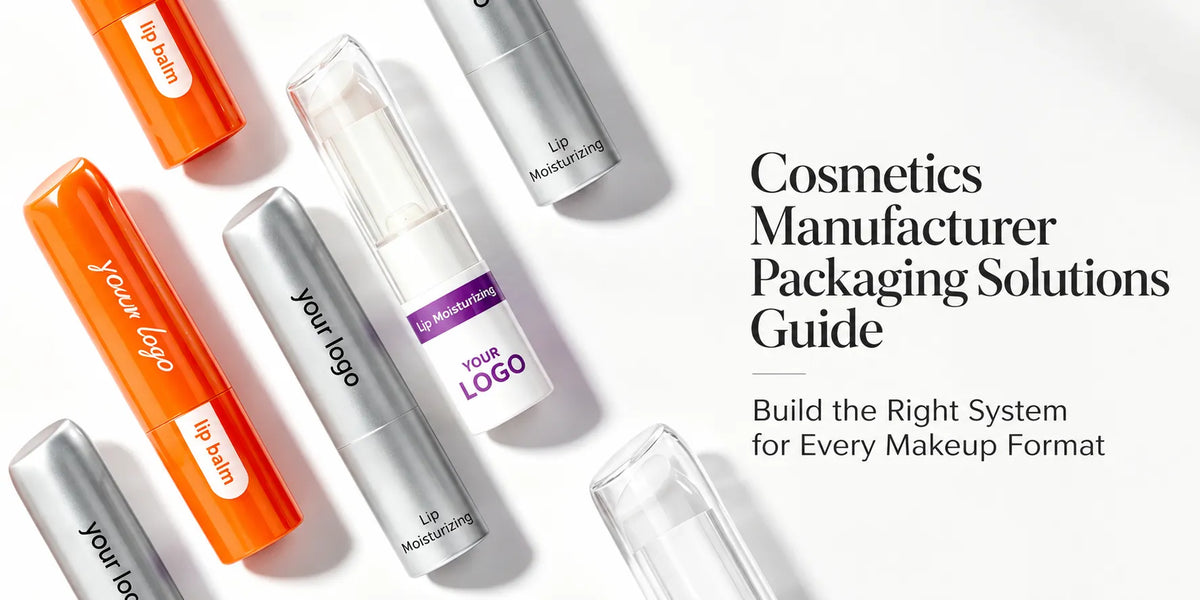
Among the many lip balm containers now available, the classic twist-up tube remains one of the most familiar and practical formats. It protects a firm balm stick, raises only the amount needed for application, supports direct swiping, and fits naturally into pocket, bag, and desk use.

Its familiarity does not make it a one-size-fits-all component. The balm formula, stick diameter, product holder, rotation mechanism, cap, filling route, and final decoration still need to work as one package. This article focuses only on lip balm tubes and explains why the standard format remains useful and what B2B buyers should confirm before production.
Quick screening framework:
- Formula: a firm solid balm that can retain its shape during extension and swiping.
- Support: the stick diameter and base need to match the inner cup or platform.
- Movement: rotation, lift, retraction, and usable travel should remain smooth.
- Protection: the cap needs sufficient internal clearance and dependable retention.
- Production: filling or forming, cooling, anchoring, decoration, and repeat specifications must be coordinated.
1. Why the Twist-Up Tube Remains a Standard Lip Balm Format
A classic lip balm tube gives a solid balm a clear and efficient use route: remove the cap, rotate the base, swipe the exposed product, lower it when the structure allows, and replace the cap. The formula does not need a separate applicator, and the consumer does not need to touch the product with a fingertip.

This simplicity supports several commercial directions. The tube can serve an everyday functional balm, a tinted retail product, a mini portable format, a premium metal-shelled line, or a playful shaped concept while retaining a recognizable internal action. Brands can therefore change the outside identity without asking users to learn an unfamiliar application method.

The format is also easy to place beside other lip balm containers. A twist-up balm can carry the daily-use role while squeeze tubes, applicator products, and jars support softer or more treatment-led formulas.
2. A Lip Balm Tube Is a Small Mechanical System
The exterior may look simple, but the working package normally includes several coordinated parts:

- Cap: protects the exposed balm and must clear the product at its highest approved position.
- Outer body or shell: provides grip, decoration area, and the visible shape of the package.
- Rotation base: converts the user's turning action into controlled vertical travel.
- Inner cup or platform: supports and anchors the balm as it rises and is pressed against the lips.
- Internal guide: keeps the moving parts aligned through extension and retraction.
Component dimensions matter as a set. A cup that fits the mechanism but does not support the selected balm can allow movement or leaning. A cap that closes on an empty tube can still contact the filled stick if the approved fill height is too high. Buyers should evaluate the assembled, filled package rather than approving the shell and formula separately.
3. Formula Hardness and Stick Diameter Must Match the Tube
A twist-up structure is most suitable for a balm that can form and retain a stable stick. The product needs enough body to remain attached to its support and resist bending or smearing during normal application. At the same time, it should provide the intended glide without requiring excessive pressure.

The correct result depends on the actual formula, stick diameter, exposed length, ambient conditions, and cup design. A wider balm can deliver broader contact but creates different cooling and support demands from a slim stick. A formula that performs well in one diameter may need adjustment when moved into a wider or taller format.
Filled trials should review softening, shrinkage, cracking, pull-away from the cup or wall, leaning, breakage during swiping, and cap contact. No material name or empty-component drawing can confirm these behaviors on its own.
4. Filling and Cooling Affect the Finished Stick
Some balm formulas are filled in a pourable condition and cool inside a suitable component, while other products may use a separate molding or structure-specific route. The correct process should be confirmed with the formula manufacturer and filling partner before the final empty lip balm tubes are ordered.

When the balm cools inside the component, the tube needs to tolerate the actual contact condition and hold the product as it sets. Fill height, trapped air, shrinkage, surface shape, anchoring, and cooling support can affect the finished appearance and use. If the product is formed separately, the bullet dimensions and insertion into the cup become more important.
Buyers do not need one universal filling assumption. They need a recorded route for the selected formula and package: filling entry, working condition, target weight, cooling orientation, assembly sequence, and finished acceptance standard.
5. Smooth Rotation Is More Than a First-Turn Impression
A good lip balm twist container should lift the product predictably without excessive looseness, roughness, or uneven travel. The useful test is not one rotation of an empty sample. The mechanism should be reviewed after filling and through repeated extension, application pressure, retraction where applicable, and reopening.

- Beginning of travel: check whether the product starts rising without dead movement or sudden jumping.
- Mid travel: confirm that the cup remains aligned and does not wobble under normal application pressure.
- Maximum approved extension: verify stability and keep the user from raising more product than the structure can support.
- Return movement: where the mechanism is retractable, check that the balm lowers without sticking or pulling away from its holder.
Mechanism feel can also change after formula contact, temperature exposure, or handling. Production samples should therefore represent the intended component material and assembly rather than a visually similar substitute.
6. Cap Fit Protects Both the Balm and Daily Carry
The cap has two practical jobs: protect the product and remain secure during frequent transport. Buyers should check cap retention, removal force, alignment, internal clearance, and whether formula residue gathers on the inner surface. A cap that is excessively loose can separate in a bag, while one that is too tight can make repeated use uncomfortable or pull on the outer shell.

Round, oval, square, mini, and distinctive shaped tubes distribute space differently. An oval body can create a flatter profile for carry; a square format provides broader logo faces; a mini tube reduces overall volume but also reduces the available mechanism, cap, and artwork space. The outside shape should leave enough room for the internal system rather than compressing it into an impractical proportion.
7. Color and Finish Can Change the Tube Without Changing Its Familiar Use
The standard mechanism does not require a standard appearance. Plastic components can be molded or coated in custom colors, while selected shells may use spray coating, UV coating, silk screen printing, hot stamping, laser engraving, or vacuum metallization according to the material and design. Aluminum outer directions can create a more authentic metal character, while paper structures follow a different push-up or paper-and-plastic twist route.

These materials should not be treated as interchangeable. For a classic tube project, the immediate design task is to confirm that decoration does not interfere with cap fit, rotation, grip, component assembly, or the approved dimensional areas. KAIYA's custom cosmetic packaging service can coordinate color and finish after the mechanism route is stable.

8. Lock the Filled Tube, Not Only the Empty Component
A production specification should record the body, cap, rotation base, cup, material, dimensions, target fill, formula reference, filling route, approved travel, cap clearance, colors, artwork, surface finishes, assembly, and packing. Keep an approved filled sample as the practical reference for appearance and operation.

This is particularly important for repeat orders. Two tubes can look almost identical while using different cups, guides, cap fits, or rotation travel. Ordering only by an external photograph creates avoidable risk. Component codes and filled approval records help the supplier reproduce the complete working combination.
9. Develop Twist-Up Lip Balm Tubes with KAIYA
KAIYA develops and supplies classic, mini, shaped, plastic, aluminum, paper, and decorated lip balm tube directions for established and custom projects. We can help buyers compare existing components, tube dimensions, cap styles, inner mechanisms, colors, finishes, and production requirements against the intended balm formula.
Send the formula direction, stick diameter, target fill, filling method, preferred tube shape, material, decoration, quantity, and schedule. KAIYA can prepare relevant samples and support the project from component selection through filled review, customization, and bulk production.