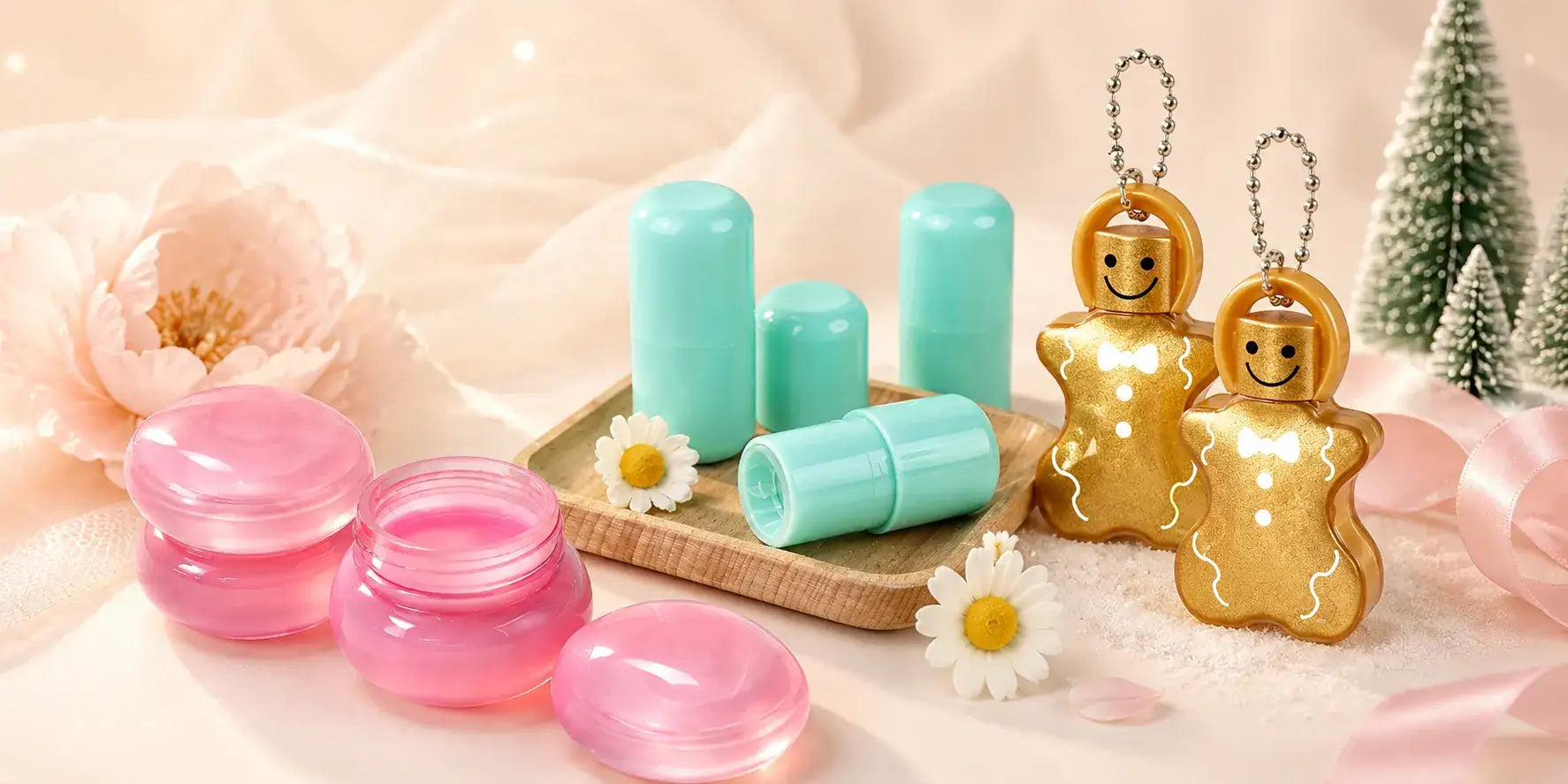
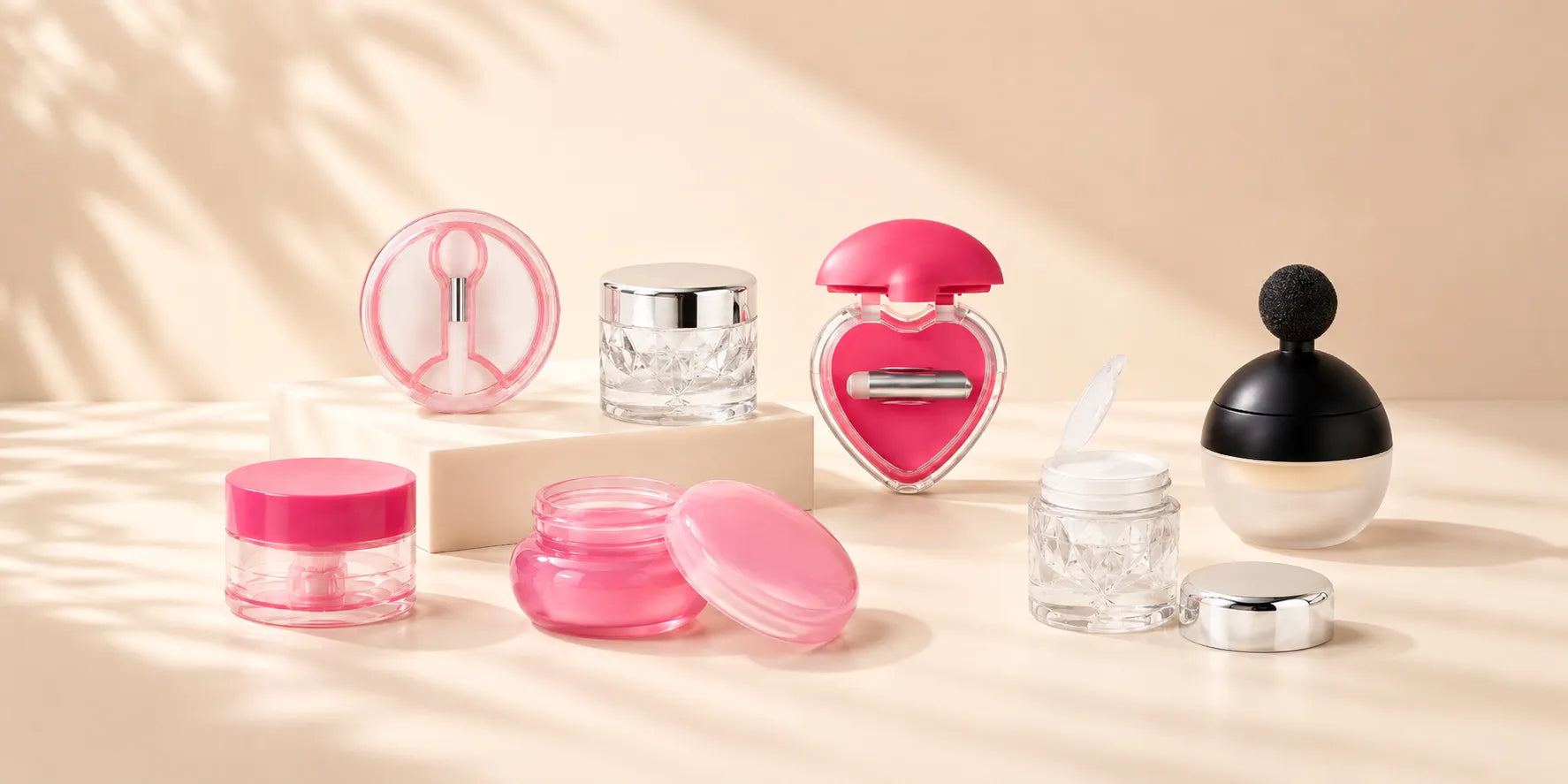
Empty lip balm jars are useful because they let brands judge whether a lip care product should feel richer, slower, and more treatment-led before full decoration starts guiding the decision. In lip care, jar formats create a different ritual from tube formats, and that shift affects how the product is understood in the market. At KAIYA, empty lip balm jars are often used as an early positioning tool rather than a simple sample shell.
This is why empty lip balm jars should not be reviewed only through size or closure. They help answer a bigger question: should the product live as a richer care step, a bedside ritual, or a slightly more premium lip treatment instead of a fast daily-carry balm?

Why Empty Lip Balm Jars Are More Than Visual Placeholders
In treatment-led lip care, the component is already shaping the product story before the formula is even tested in final market form. Empty lip balm jars are useful because they let brands see how the product may feel in a richer, slower, more care-focused routine. This is very different from evaluating a tube-led balm route designed for quick reapplication.
KAIYA usually uses empty lip balm jars to compare whether the category role should stay routine-led or shift toward something more deliberate. That early decision often influences whether the project should remain closer to balm, move toward treatment, or sit somewhere between the two inside the wider lip range.
How Empty Lip Balm Jars Help Brands Judge Treatment Positioning Earlier
Because jar formats create a different rhythm, they tend to push the product toward a more considered type of use. That can be useful when the brand wants stronger ritual, more visible care value, or a more premium lip treatment mood. It can also become a problem if the product is really supposed to stay quick, easy, and highly routine-led.
KAIYA often treats empty lip balm jars as an early warning system in this stage. If the jar already makes the product feel heavier or slower than the intended category role, it is better to correct the route early than to continue developing the wrong format with stronger decoration later.

Why Empty Lip Balm Jars Still Need to Fit the Wider Lip Category
Even a richer lip treatment does not exist alone. It still sits beside gloss, mask, oil, and more standard balm formats. That means empty lip balm jars should be judged not only by whether they feel premium enough, but by whether they still make sense inside the broader Cosmetic Packaging system and nearby lip products.
At KAIYA, this is where we often compare jar-led routes against more routine-led formats and against related lip structures such as Lip Gloss Packaging so the full line stays coherent even when one product moves into a richer treatment direction.
Why Empty Lip Balm Jars Are Useful Before Decoration Starts Driving the Project
Jar formats are very good at creating treatment mood, but that can also become a trap if the structure is allowed to define the product too early in the wrong direction. Empty lip balm jars help brands pause and ask whether the product is truly meant to feel slower, richer, and more premium, or whether a jar route is simply making it drift away from its intended routine role.
KAIYA uses these early comparisons to stop treatment-led lip care projects from becoming more ornamental than useful. A stronger jar direction should reinforce the intended care ritual, not simply make the product feel heavier without a clear commercial reason.

How KAIYA Supports Empty Lip Balm Jar Reviews
KAIYA supports beauty brands looking for practical, treatment-led, and production-ready lip jar directions from a China-based supplier. We work across empty lip balm jars, lip balm jar packaging, and related lip care routes with attention to closure behavior, treatment feel, decorative fit, and how the structure shapes the final category role.
For teams evaluating empty lip balm jars, the best first step is to define whether the product should behave like a richer treatment item or a more routine lip care product. Once that is clear, KAIYA can help narrow the right structure, finish route, and wider category fit before sampling moves too far in the wrong direction.