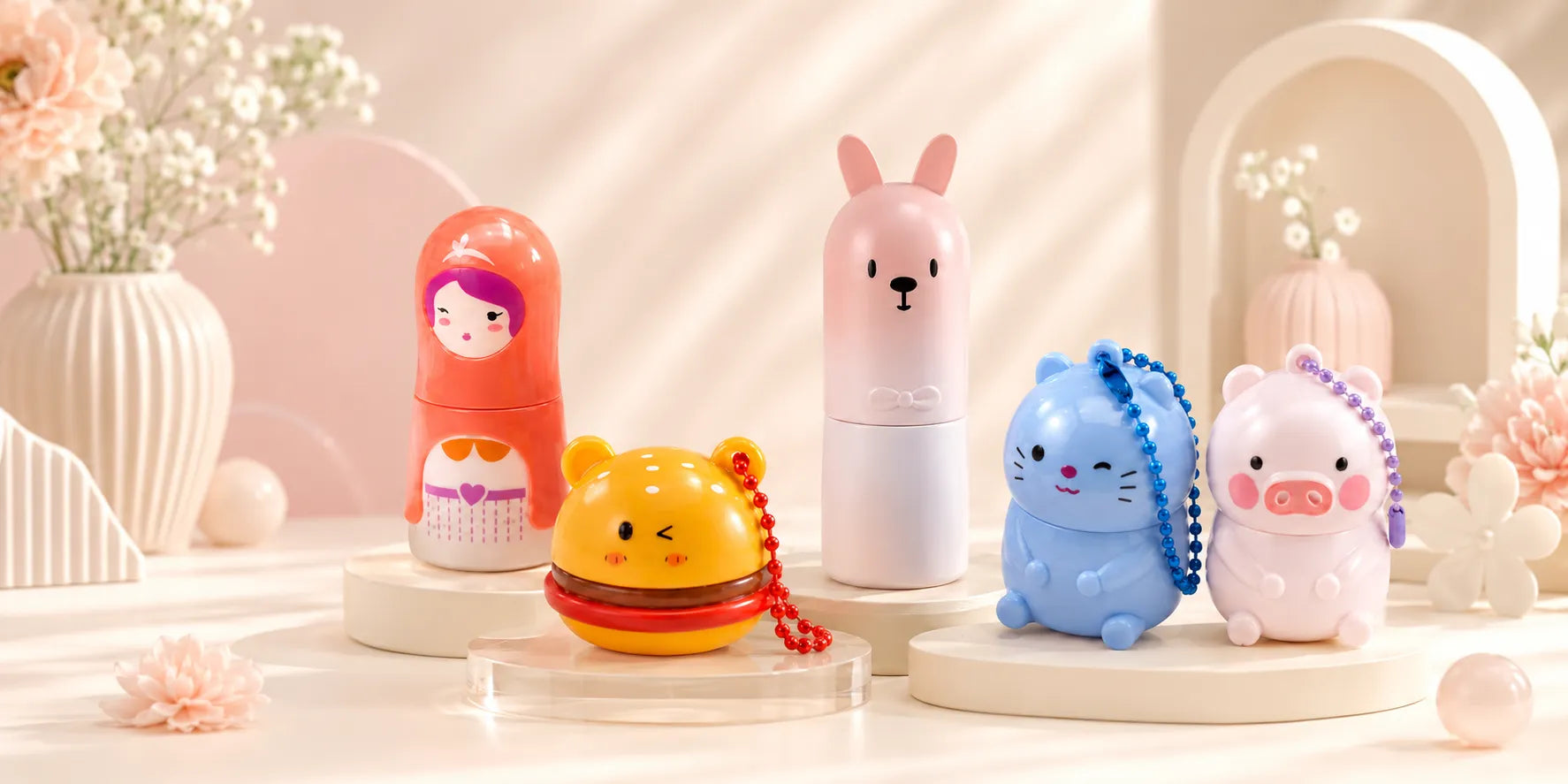
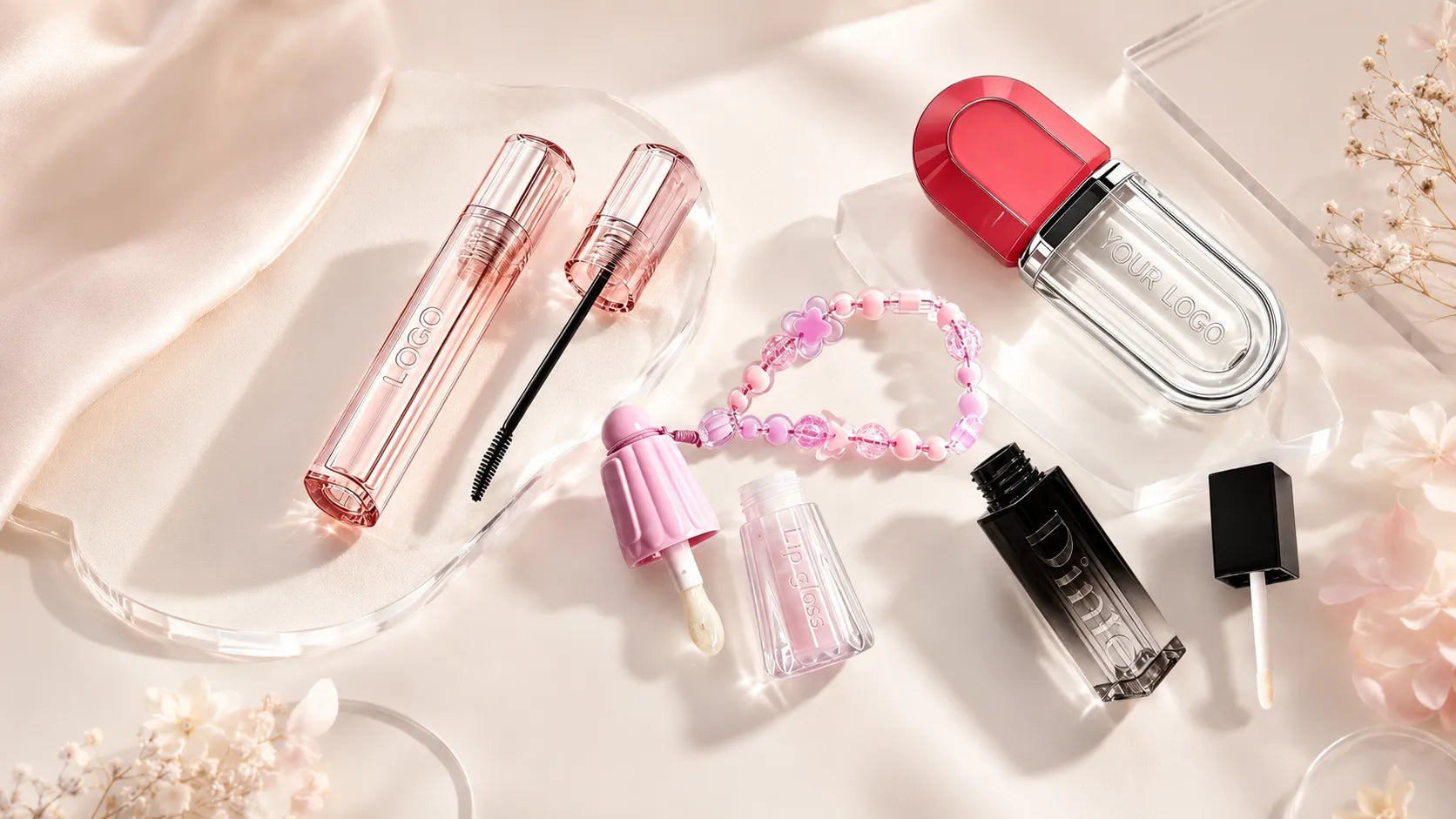
Lip gloss containers are one of the most visibility-sensitive packaging categories in color cosmetics. Minor changes in tube clarity, cap finish, or applicator behavior are quickly noticed by users and retailers. At KAIYA, gloss packaging is therefore managed as a precision scaling route rather than a simple container purchase.
As gloss portfolios grow, quality risk usually shifts from first-sample aesthetics to repeat-order discipline. Brands that control this transition early tend to scale faster with lower correction cost and more stable shelf presentation.
KAIYA links gloss development with cosmetic tube packaging, clear cosmetic packaging, and private label service or custom service routes depending on brand scale goals.

1. Structure Precision: Why Gloss Containers Need Tight Fit Governance
Gloss packaging performance depends on coordinated fit among bottle neck, wiper, stem, and applicator. If these interfaces drift, formula pickup and closure confidence degrade quickly. KAIYA treats interface stability as a first-line control before visual expansion.
For scalable programs, KAIYA usually defines fit checkpoints by stage: sample approval, pilot lot, and first mass lot. This staged validation helps teams catch drift early instead of discovering incompatibility after variant expansion has already started.
2. Clarity and Finish Control in High-Visibility Gloss Lines
Gloss lines often rely on transparent or semi-transparent components, making lot variation easier to detect. KAIYA validates clarity behavior and finish repeatability through production-relevant process routes, not concept-only references.
In practice, this means using unified visual references and fixed approval criteria for clarity and finish so cross-batch comparison is objective. Without this discipline, brand teams often spend unnecessary time renegotiating visual acceptance during reorders.

3. Variant Expansion Without Line Fragmentation
As shade and finish variants expand, container families can lose coherence unless style boundaries are defined. KAIYA typically sets core family rules first, then expands controlled variants so line identity remains stable while SKU breadth increases.
A useful control method is to separate variant layers into fixed and flexible groups. Fixed layers include core silhouette, cap-language ratio, and baseline transparency standard. Flexible layers include selected shade accents, secondary finish details, and campaign-level decorative differences. This model helps teams scale the line without turning each variant into a separate packaging system.

4. Wholesale and Reorder Performance Metrics That Matter
For gloss programs, supplier quality should be measured by first-lot consistency, reorder variance, and correction responsiveness rather than quote tables alone. This is where lifecycle cost discipline becomes more useful than first-order unit price comparison.
KAIYA often recommends adding one more metric: change-control transparency. If material, finish, or subcomponent changes are made, teams should know exactly when revalidation is required. This prevents silent drift in growing gloss portfolios.
In wholesale execution, teams should also monitor defect-pattern migration, not just total defect rate. A stable total defect percentage can still hide rising concentration in critical issues such as applicator-fit inconsistency or cap-seal confidence. KAIYA uses issue-pattern tracking to identify early warning signals before they become visible customer complaints.

5. Common Failure Modes in Scale-Up and How to Prevent Them
In lip gloss container programs, recurrent failure modes include wiper-fit drift after subcomponent changes, finish inconsistency across parallel color batches, and visual mismatch between pilot references and mass-production lots. These issues usually come from weak handover discipline rather than from one isolated technical error.
To reduce this risk, KAIYA typically locks a handover package before volume release: approved references, measurable acceptance boundaries, critical-interface control points, and escalation triggers. This keeps cross-team decisions synchronized as program complexity increases.
6. Integration with Broader Lip Portfolio Strategy
Lip gloss containers should align with adjacent lip routes such as lip balm containers and lipstick tubes while keeping category-specific behavior. KAIYA uses this integration to keep lip assortments coherent without forcing uniform mechanics.
This alignment is especially important when brands run mixed-channel launches. If online hero SKUs and offline support SKUs use disconnected packaging logic, the collection can lose identity even when individual components are acceptable. A gloss route should therefore be validated as part of full lip-line hierarchy, not only as a standalone container program.

7. How KAIYA Supports Gloss Container Programs
KAIYA supports gloss-focused brands with structure-fit discipline, clarity/finish control, and scale-ready reorder governance. The objective is to keep your lip gloss line commercially strong as volume and SKU complexity rise.
In execution terms, this support usually includes pre-PO fit-risk mapping, pilot-to-mass handover controls, and reorder trend monitoring aligned with the same acceptance references used in first-lot approval. That continuity is critical in gloss categories because visual and functional drift can accumulate quietly before becoming commercially visible.
For procurement and product teams, the practical benefit is a more predictable scaling path: fewer correction loops, clearer supplier accountability, and faster decision cycles when new variants are introduced. KAIYA uses this model so lip gloss container programs can grow without sacrificing category clarity or repeat-order confidence.