Mini cosmetic containers have an immediate appeal: familiar makeup formats become more delicate, portable, giftable, and collectible when their proportions are reduced. Yet the strongest mini products do more than look charming. They still open smoothly, dispense or present the formula correctly, support comfortable application, and feel complete enough to sell as real retail products.
This is why mini color cosmetics are moving beyond the traditional sample role. Brands can use them for paid minis, children's or playful collections, seasonal edits, coordinated sets, portable touch-up products, and entirely new product families. The opportunity comes from combining small-scale charm with full-scale packaging discipline.

Quick overview:
- Natural appeal: reduced proportions can make a familiar container feel delicate, approachable, and collectible.
- More than samples: a mini can be a permanent retail SKU, not merely a temporary trial pack.
- Collection potential: coordinated lip, eye, face, and nail minis can create a complete product story.
- Full category reach: tubes, sticks, compacts, cushions, jars, bottles, and palettes can all be developed in suitable small formats.
- Complete function: the package may shrink, but its closure, mechanism, applicator, and internal separation still need to work.
- Development route: existing molds suit faster visual customization, while exclusive mini structures may require original tooling.
1. Small Proportions Give Makeup an Immediate Natural Charm
Miniature objects attract attention because they compress something recognizable into a more delicate scale. In cosmetics, that effect is especially strong: a tiny lipstick, petite compact, short mascara tube, or small clear jar still communicates the familiar product category, but the reduced proportion makes it feel lighter, more playful, and easier to collect.

The charm is not limited to cuteness. A compact format can also look refined when the cap-to-body ratio, wall effect, opening line, logo position, and color are controlled. Clear walls can turn the formula into part of the visual design; a metallic collar can add one precise highlight; a rounded silhouette can make a small pack feel softer in the hand. Because the surface is limited, every proportion and detail becomes more visible.

The B2B lesson: small size creates attention, but deliberate proportion creates value. A mini that looks like a complete design can support a stronger retail position than a visibly simplified sample container.
2. Mini Packaging Is No Longer Limited to Samples
Samples remain one useful application, particularly when a brand wants formula discovery or shade trial. However, small cosmetic containers now serve several wider commercial roles: paid travel sizes, portable bestsellers, lower-volume entry products, gift-with-purchase items, holiday assortments, subscription-box formats, limited color edits, and permanent mini ranges.

A retail mini should preserve enough of the main product's identity to feel intentional. That may mean keeping the same transparent formula view, cap color, closure feel, applicator concept, or logo hierarchy as the full-size version. The mini does not need to copy every exterior dimension, but it should communicate that it belongs to the same brand and delivers the same category experience.

This wider role also changes the sourcing brief. A disposable-looking pack may be acceptable for a one-time sampling program, while a paid mini needs stronger visual finishing, repeatable opening, usable access to the remaining formula, suitable protective packing, and a decoration area that stays legible at reduced scale.
3. Mini Formats Support Trend Beauty and Selected Children's Lines
Small makeup containers naturally suit trend-led beauty because they are easy to group, photograph, gift, carry, and refresh through color. Pastels, translucent tints, glossy surfaces, shaped caps, compact characters, and simple illustrations can turn several small products into an expressive collection without requiring every item to use the same container.

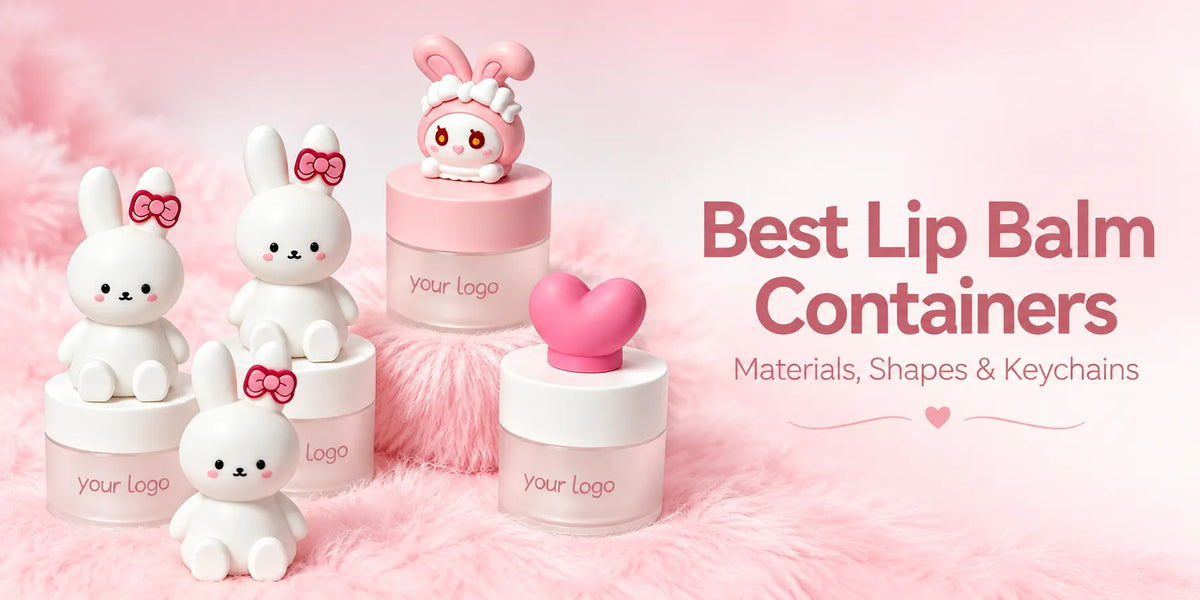
They are also a practical direction for selected children's makeup packaging. Rounded proportions, bright or soft colors, heart, fruit, candy, animal, or character cues can make the package friendlier and easier to recognize. A small lip balm, cream-color compact, nail product, or simple lip format can become part of a coordinated children's line when the formula, component, labeling, testing, age positioning, and target-market requirements are confirmed for the project.

Children's styling is only one possibility. The same mini scale can support clean minimalism, fashion-led metallic color, transparent formula display, or a more premium jewel-like direction. KAIYA's cute makeup packaging range shows how shape and color can intensify the charm, while restrained designs keep the category open to adult retail collections.

4. A Mini Collection Can Be Stronger Than One Isolated Product
Mini packaging is especially effective when the brand plans a series rather than a single reduced SKU. A lip gloss, mascara, blush compact, lipstick, and small palette can share a limited set of visual signatures—perhaps one cap color, one translucent tint, one metallic accent, one logo position, or one family of rounded proportions—while each product retains the structure required by its formula.

Series planning creates several launch routes. A brand can build a complete mini look, group different shades of one hero product, combine a bestseller with discovery products, or develop seasonal color stories that use a shared packaging platform. The small scale helps the set feel abundant without requiring a large presentation box or forcing every item into a high fill volume.
Best starting point: define the role of each SKU before choosing the visual family. The hero product may carry the strongest shape or finish, while supporting items repeat only enough color, logo, and proportion to remain recognizable as one collection.
5. Mini Cosmetic Containers Now Cover the Full Makeup Range
Mini development is no longer concentrated in one or two lip formats. Suitable small structures can now support a wide range of color-cosmetic categories:
- Lip products: small lip gloss tubes, squeeze tubes, lipstick mechanisms, lip balm sticks, treatment jars, and selected dual-ended formats.

- Eye and brow products: short mascara tubes, eyeliner containers, brow tubes, pencils, mono-shadow cases, and compact palettes.

- Face products: blush, highlighter, contour, pressed powder, loose powder, cream-color jars, sticks, and small cosmetic compacts.

- Cushion products: reduced cushion cases that still preserve the reservoir, inner lid, applicator area, and outer closure.

- Nail and selected liquid products: small nail-polish bottles, compact foundation bottles, and other project-specific containers with suitable closures or applicators.

KAIYA continues to expand mini formats across these categories rather than treating mini packaging as one standard bottle. This matters because each new category adds a different component relationship: a lipstick needs mechanism travel, a mascara needs a reservoir-wiper-stem-brush system, and a compact needs a pan, hinge, closure, and pickup route.
6. A Mini Cushion Shows Why Smaller Does Not Mean Simpler
A mini cushion compact is a useful example of the technical challenge. The outer diameter can be reduced, but the package still needs a formula reservoir or compatible cushion cup, an inner lid that separates the formula area, an upper level for a mini puff, and an outer cover. Depending on the design, it may also include a mirror, hinge, clasp or magnet, sealing relationship, and decorated top surface.

The double-layer arrangement therefore has less tolerance for wasted space. The upper tray needs enough diameter and depth for a usable puff; the inner lid needs room to open without colliding with the puff or mirror; the reservoir needs the intended fill; and the outer hinge and closure must remain comfortable to operate. A puff that fits visually may still be too small to grip, while an oversized puff can press against surrounding parts or make the case too thick.
KAIYA can review a selected empty cushion compact as a complete assembly, including reservoir fit, inner-lid action, puff space, mirror placement, opening angle, closure, and filled handling. This same principle applies across mini packaging: functional parts cannot simply disappear because the outer case becomes smaller.
7. Every Opening, Mechanism, and Applicator Must Stay Smooth
Reduced dimensions can change leverage, grip, travel, and component clearance. A short cap may be harder to hold; a small snap may feel disproportionately strong; a mini lipstick may have limited mechanism travel; a short wand may not reach the lower formula area; a tiny compact may leave too little space for the thumb to open the clasp.

The development review should therefore follow the real use sequence: pick up the package, open it, withdraw or expose the formula, apply the product, return the applicator or mechanism, close it, carry it, and open it again. Filled testing is important because formula viscosity, powder movement, applicator load, and component contact cannot be judged from an empty shell alone.
Decoration also becomes more demanding. Smaller logos require clean line weight and controlled placement; curved surfaces offer less uninterrupted artwork area; projecting shapes need packing clearance; and slight cap misalignment becomes obvious when the complete object is only a few centimeters wide.
8. Choose the Development Route That Matches the Mini Concept
An existing mini structure is often the efficient route when its capacity, applicator, mechanism, and closure already suit the formula. The brand can then develop compatible molded colors, logos, transparent effects, selected coatings, metallic details, and coordinated SKU combinations without changing the established silhouette or internal architecture.

Original development becomes relevant when the project requires an exclusive shape, a different mini capacity, a new double-layer compact, a special character, an integrated hanging point, a new applicator relationship, or a family of containers designed around one custom geometry. These changes may require appearance design, structural engineering, 3D confirmation, prototypes, DFM, tooling, trials, and model-specific production preparation.
KAIYA can compare existing plastic cosmetic containers with a deeper custom cosmetic packaging route. The right choice depends on the formula, category, capacity, desired functions, target look, quantity, budget, and launch schedule—not on small size alone.
9. Build a Complete Mini Makeup Line with KAIYA
KAIYA develops mini primary packaging across lip, eye, face, powder, nail, stick, compact, cushion, jar, tube, and selected bottle directions. We can help brands evaluate category structure, usable capacity, component fit, color and decoration, series coordination, sample stages, filling relationships, packing, production, and repeat supply.
Share the product categories, formulas, target fills, preferred application methods, audience, style references, set plan, logo files, quantity, and launch timing. KAIYA can then recommend compatible existing options or assess an original mini series that preserves both the natural attraction of small scale and the complete experience expected from a retail cosmetic.