

Finished Cosmetics Manufacturing Certifications
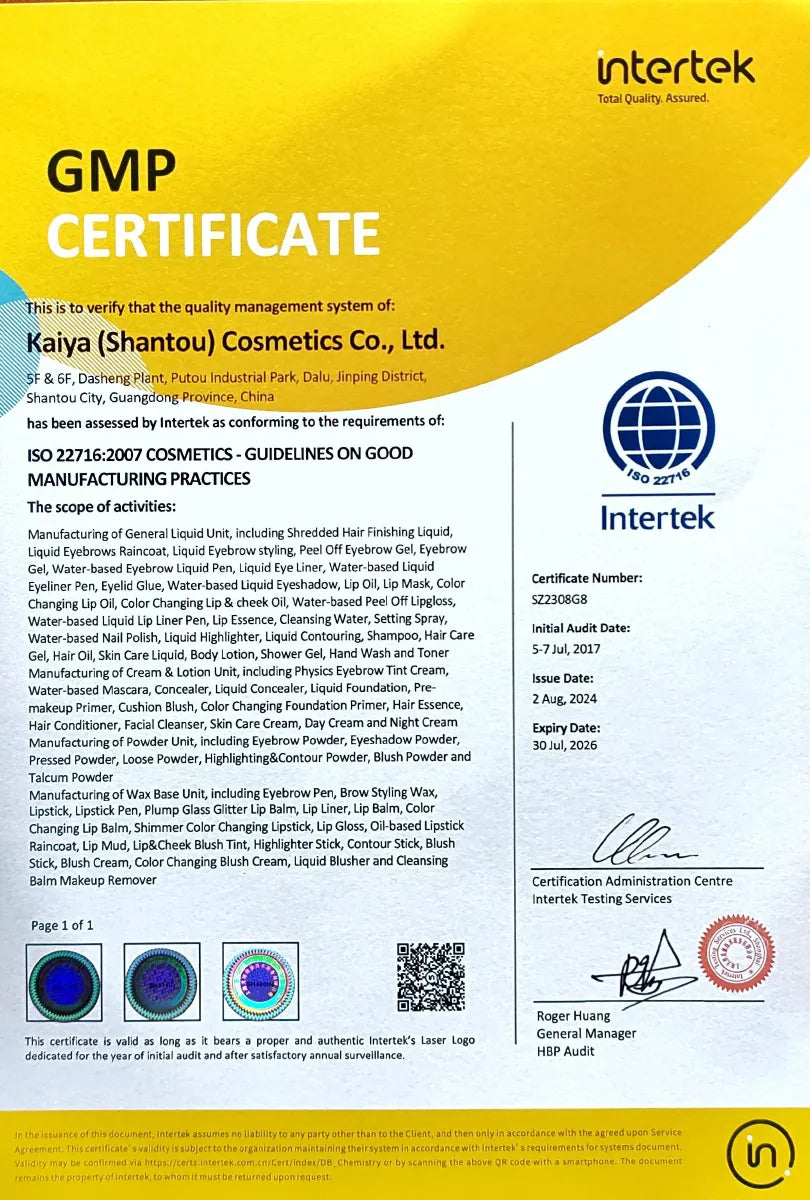
ISO 22716:2007 – Cosmetics GMP
KAIYA holds ISO 22716:2007 Cosmetics Good Manufacturing Practices certification for our applicable finished cosmetics manufacturing operations.
- What It Covers:
Cosmetic production, quality-related process control, storage, handling and other GMP practices throughout the manufacturing environment.
- Why It Matters:
ISO 22716 provides beauty brands with a recognized reference when evaluating whether a cosmetic manufacturer follows structured GMP procedures and controlled production practices.

Intertek Cosmetics GMP
KAIYA has also completed an independent cosmetics GMP assessment by Intertek based on U.S. FDA Cosmetic Good Manufacturing Practice Guidelines.
- What It Covers:
Manufacturing management, hygiene practices, product handling and quality procedures used throughout finished cosmetics production.
- Why It Matters:
It provides additional third-party verification of the GMP practices behind KAIYA's cosmetics manufacturing operations, particularly for international beauty projects.
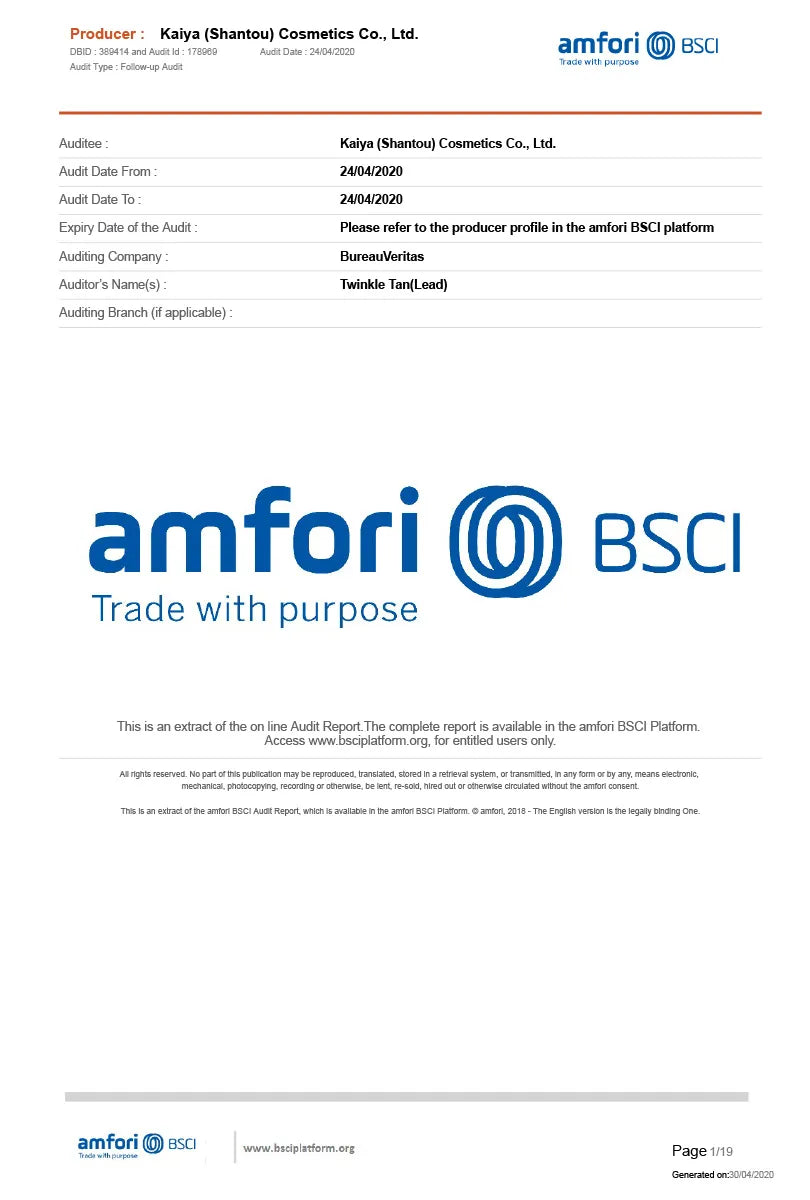
amfori BSCI Factory Social Compliance Audit
KAIYA has undergone an amfori BSCI factory social compliance audit, giving international buyers greater visibility into the management and working environment behind our manufacturing operations.
- What It Covers
Working conditions, employee protection, occupational health and safety, responsible employment practices and broader social compliance management.
- Why It Matters
BSCI is different from a cosmetics GMP or product quality certification. It helps brands, distributors and sourcing teams evaluate the social responsibility and factory management practices of a potential long-term supplier.
For international buyers with formal supplier qualification procedures, social compliance can be reviewed alongside product quality, manufacturing capability and technical documentation.
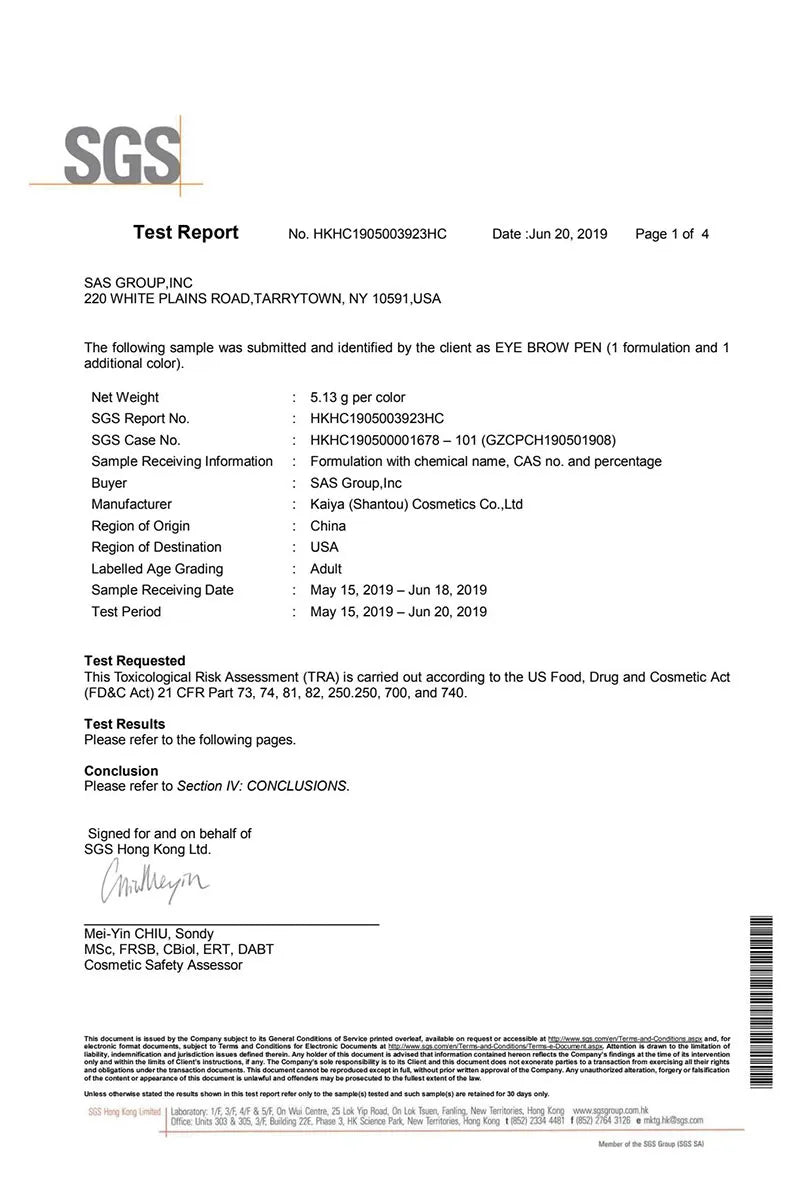
SGS Third-Party Product Testing
KAIYA has worked with SGS for independent third-party testing of selected finished cosmetic products.
- What It Covers
Testing is performed on specific submitted products or formulas to provide independent technical evidence according to the relevant project requirements.
- Why It Matters
SGS reports can support product evaluation and market preparation. Because testing applies to the submitted sample or formula, the relevant report is confirmed according to each project rather than applied to every KAIYA product.

SDS – Safety Data Documentation
KAIYA can provide or prepare Safety Data Sheet (SDS) documentation for relevant cosmetic products and formulas.
- What It Covers
Product or formula information related to composition, handling, storage and safety considerations where applicable.
- Why It Matters
SDS documentation may support buyer review, transportation, storage or other technical requirements within an international cosmetics project. The appropriate SDS is matched to the actual product and formula.
Cosmetic Packaging Certifications & Technical Documentation
Compliance Documentation by Project
Compliance requirements are not identical for every finished cosmetics or cosmetic packaging project.
The documents needed can vary according to the destination market, product type, formula, packaging materials, claims and development model. KAIYA reviews these factors during the project stage to determine which existing documents are relevant and whether additional technical information or testing should be considered.
- Target Market
Projects for the USA, European Union, United Kingdom and other markets may involve different regulatory and documentation requirements.
- Product & Packaging Type
Finished cosmetics, packaging materials and different component structures may require different forms of supporting documentation.
- Formula, Materials & Claims
Ingredients, pigments, packaging materials and product claims can affect testing or technical documentation requirements.
- Project Model
Private label, OEM, ODM, custom formulation and custom packaging projects may require different levels of product, manufacturing and technical information.
From Documentation to Production Control
Certifications and technical reports provide important evidence when evaluating a supplier, but reliable production also depends on how those requirements are applied during actual manufacturing.
KAIYA connects documentation with practical production control across three areas.
- Product Development
Formula, packaging and project specifications are reviewed and confirmed before bulk production.
- Manufacturing
Approved requirements are carried through bulk manufacturing, filling, assembly and packaging processes.
- Quality Control
Finished cosmetics and packaging are inspected according to confirmed specifications and applicable project requirements.
This allows buyers to evaluate not only which documents KAIYA can provide, but also how manufacturing and quality requirements are carried into production.


Request Certification & Compliance Documents
If you are evaluating KAIYA for a finished cosmetics or cosmetic packaging project, send us your product type, destination market and project requirements.
Our team can help identify which available certifications, test reports and technical documents are relevant to your project and whether additional documentation or testing may be required.
Frequently Asked Questions
Finished Cosmetics Certifications
- KAIYA holds ISO 22716:2007 Cosmetics Good Manufacturing Practices certification for applicable finished cosmetics manufacturing operations. We have also completed an independent cosmetics GMP assessment by Intertek based on U.S. FDA Cosmetic Good Manufacturing Practice Guidelines.
- In addition, KAIYA has an amfori BSCI factory social compliance audit and can provide relevant third-party testing and technical documentation for selected cosmetics projects.
- ISO 22716 provides Good Manufacturing Practice guidelines specifically for cosmetics production, control, storage and handling.
- For beauty brands comparing cosmetic manufacturers, it provides a recognized reference for evaluating whether production is managed through structured GMP procedures, hygiene controls and documented manufacturing practices.
- It does not replace product-specific testing or destination-market requirements, but it is an important part of assessing the manufacturing system behind a private label, OEM or custom cosmetics project.
- KAIYA should not be described as an “FDA certified cosmetics manufacturer.”
- Our cosmetics manufacturing system has been independently assessed by Intertek based on U.S. FDA Cosmetic Good Manufacturing Practice Guidelines. This provides third-party verification of relevant GMP practices used in our finished cosmetics production.
- For projects intended for the U.S. market, additional product, labeling and regulatory requirements should still be reviewed according to the specific formula and product.
- The amfori BSCI factory audit focuses on factory social compliance and responsible business practices rather than cosmetic formulation or product quality.
- It covers areas such as working conditions, employee protection, occupational health and safety, and responsible factory management.
- For international beauty brands, distributors and sourcing teams, BSCI provides another reference when evaluating a long-term supplier alongside manufacturing capability, GMP systems, quality control and commercial requirements.
- Not necessarily. SGS test reports normally apply to a specific submitted product, formula or sample rather than automatically covering an entire cosmetics range.
- KAIYA can review available third-party reports according to the product being developed. If an existing report does not apply to a new formula, testing requirement or destination market, additional testing may need to be arranged for that particular project.
- This helps ensure that the documentation being reviewed is actually relevant to the product being supplied.
- Yes, SDS documentation can be provided or prepared for relevant finished cosmetic products and formulas where applicable.
- An SDS contains product-specific technical and safety information that may support handling, storage, transportation or buyer review.
- Because the information is connected to the actual formula, one SDS should not be treated as covering every product. KAIYA confirms the appropriate document according to the formula and project requirements.
Yes. Buyers evaluating KAIYA for private label cosmetics, OEM, custom formulation or cosmetic packaging projects can discuss the required documentation during the project review stage.
Tell us the product category, packaging type and destination market, and our team can help identify which available certifications, audit records, test reports or technical documents are relevant.
Where project-specific documentation or additional testing is required, this can be reviewed before bulk production.